History & Significance
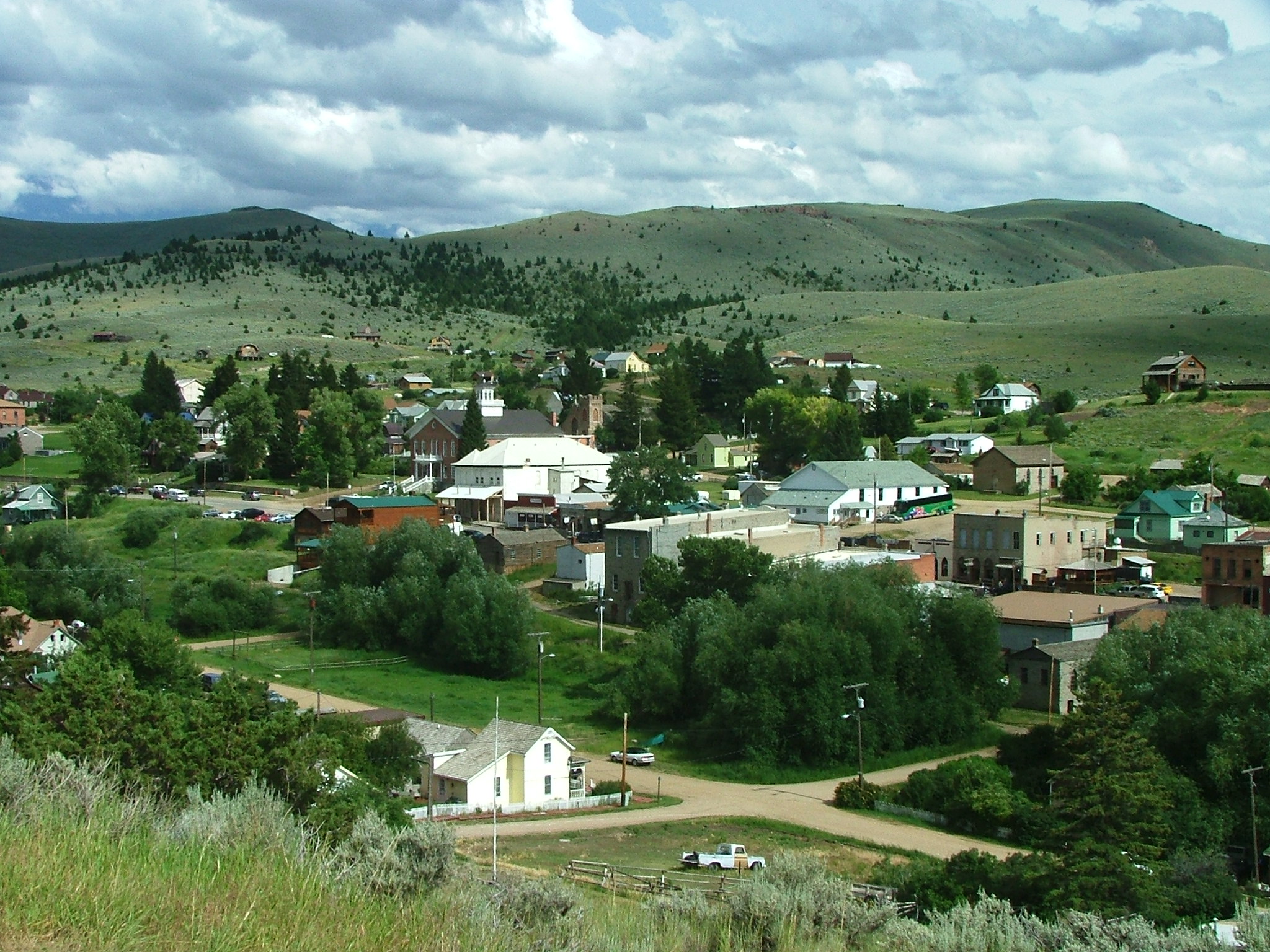
Virginia City occupies a bench above Alder Gulch in Madison County in the mountains of southwestern Montana. It was founded in 1863 after a prospecting party discovered placer gold in the creek gravel of the gulch, a find so rich that the entire fourteen-mile length of Alder Creek was staked within days. The rush that followed brought 10,000 miners into this remote valley within a year, creating a string of mining camps that formed, collectively, one of the most productive placer gold districts in American history.
The Alder Gulch district produced gold at a rate that justified extraordinary investment and extraordinary crime. The road agents who preyed on the Bannack to Virginia City road during 1863 and 1864 were organized under the leadership of Henry Plummer, the sheriff of Bannack, who used his law enforcement position to coordinate robberies that killed over a hundred people. When the miners' vigilante committee uncovered the network in December 1863, they hanged twenty-one men over the course of a month, including Plummer himself, in one of the most dramatic episodes of frontier justice in American history.
Montana Territory was created by Congress in May 1864, and Virginia City was named its capital. The territorial government, the courts, and the legislature met here while the gold of Alder Gulch funded the territorial economy. Virginia City was briefly one of the most important places in the American West, a political and commercial center for a territory the size of France.
The placer gold was mostly worked out by the late 1860s, and the population declined sharply as the easier surface gold was exhausted. Virginia City survived as the territorial and then state capital until Helena, which had its own gold deposits and better transportation connections, displaced it in 1875. What remained was a town of several hundred people in a valley that had once held tens of thousands, its built environment largely frozen at the moment the rush ended.
Alder Gulch and the mechanics of placer gold
Placer gold deposits form when erosion works gold-bearing rock and concentrates the heavy metal in stream gravel over geological time. The deposits in Alder Gulch were exceptionally rich because the geological conditions that produced them were unusually favorable: a long period of erosion working gold-bearing formations in the mountains above had concentrated the metal in the gravel of a long, confined creek valley. When the prospecting party of John Bozeman and others staked their claims in May 1863, they found gold near the surface across a distance that was unprecedented even by western American standards.
The initial mining used the simplest technology: a gold pan, a sluice box, and a rocker to concentrate the gravel and separate the gold. Miners working in this way could process only a limited amount of gravel per day, but the richness of the Alder Gulch deposits meant that even modest operations could yield impressive returns. As the surface-level gravel was worked out, more sophisticated hydraulic operations that used water under pressure to break down the gravel banks came into use, significantly increasing the volume of material that could be processed.
The total production of the Alder Gulch district is estimated at between $30 million and $90 million in gold at 1860s prices, a range that reflects the imprecision of the accounting in a district where much gold was transported informally. The Madison County records from this period include claim books, mining company records, and the property transfers that documented the consolidation of individual placer claims into larger corporate mining operations as the placer era gave way to more capital-intensive methods.
The road agents and the vigilantes
Henry Plummer arrived in Bannack, Montana's earlier gold camp, in 1862, won election as sheriff, and began organizing the robbery network that preyed on the gold shipments and travelers moving between Bannack and Virginia City. The organization, known as the Innocents, reportedly had over one hundred members spread across the territory, and Plummer used his position as law enforcement to receive intelligence about gold shipments and to avoid suspicion.
The vigilante committee that destroyed the Innocents was organized in December 1863 after the miners determined that the legal system was either complicit in or helpless against the road agent network. Over the following month, vigilante parties arrested, tried in summary proceedings, and hanged twenty-one men, working down the network from the operational level to Plummer himself. The hangings were conducted publicly, at night, without ceremony, and the vigilantes posted a warning sign, 3-7-77, whose meaning has never been definitively established, at the scenes of the executions.
The vigilante proceedings were not legal in any formal sense, and they generated controversy at the time and since. The evidence against some of the men hanged was thin. The vigilantes themselves were never prosecuted. The 3-7-77 symbol was adopted by the Montana territorial militia and later by the Montana Highway Patrol and remains on that agency's badge today, a continuing official acknowledgment of a extra-legal episode that the state has chosen to commemorate rather than repudiate.
The preserved town and what survives
Virginia City's preservation is partly accidental and partly deliberate. The decline in population after the placer era left the town with buildings that were not replaced simply because the economic pressure to replace them never arrived. Charles and Sue Bovey began purchasing and restoring Virginia City properties in the 1940s and 1950s, acquiring much of the historic downtown and using it to operate a tourist attraction based on the authentic preservation of frontier commercial buildings.
The Bovey collection was sold to the state of Montana in 1997 and is now managed by the Montana Heritage Commission as a state historic site. The preserved downtown includes saloons, stores, a newspaper office, a livery stable, and other commercial buildings that have been maintained in their original condition or carefully restored. The result is one of the most complete surviving examples of a 1860s mining boomtown anywhere in the American West.
The Madison County deed records document the remarkable real estate history of a town that went from raw camp to territorial capital to near-ghost town within a decade. The claim books from the Alder Gulch mining district, the territorial government records, and the subsequent property transfers as the Boveys assembled their preservation portfolio are all part of the county's documentary record. Virginia City's preserved streetscape and its supporting land records make it one of the most thoroughly documented frontier mining towns in the country.