John Sontag, born May 27, 1861, met his end on July 3, 1893, having built a reputation in the American West as a bandit who made his living raiding trains.
Background
Born to Maria (Bohn) and Jacob Contant in Mankato, Minnesota, John Sontag stood as the eldest child of the family. Jacob died in 1867, and Maria later married Matthias Sontag, a man who had served the Union Army during the Civil War; it was from this stepfather that John took his new surname. A younger sibling, George, arrived in 1864 and kept the Contant name for official purposes, though he too went by Sontag on occasion. The pair earned a reputation together, running afoul of the law so often that people came to call them the Sontag Brothers.
Seeking work, John made his way to California and found employment with the Southern Pacific Transportation Company. A coupling accident in the Fresno rail yard left his leg crushed, and he later blamed the company both for neglecting his injuries and for refusing to give him his job back once he recovered. By 1889 he had found work instead on a farm near Visalia, in Tulare County, belonging to a Canadian immigrant named Christopher "Chris" Evans. Evans nursed his own grievances against Southern Pacific, furious over steep freight charges and the company's tactics for forcing landowners off valuable wheat ground, a conflict remembered as the Mussel Slough Tragedy. The two men next tried their hand at running a livery stable in Modesto, a venture that ended within a year when fire destroyed the building and killed the horses inside. Somewhere along the way, John became engaged to Eva, Evans's daughter.
With the stable gone, the two turned to robbing trains, striking at places like Ceres, Goshen, Pixley, and a stop called Alila that would later become Earlimart. Each job was followed by a retreat into hideouts tucked in the foothills near Eshom Valley, among them Fort Defiance and Roop's Fort outside Susanville. Their method was consistent: horses were staged near the intended robbery site beforehand, after which the men would double back on foot to board the train quietly at the depot. Once the locomotive approached the spot where the horses waited, they would emerge and force the engineer to stop, then blast open the express car with dynamite to reach the cash inside before riding off on the mounts they had left waiting.
A trip to Minnesota brought them together with John's brother, George Contant, freshly out of the Nebraska State Penitentiary in Omaha, where he had done time for theft until his 1887 release. On the first of July, 1892, the trio struck a train traveling the Minnesota River route between St. Peter and Kasota. The haul was thin, but the act drew the attention of Pinkerton agents. Within a month the men had returned to California and hit a train at Collis, a town now known as Kerman in Fresno County, this time walking away with $500 along with sacks of Mexican and Peruvian coins that carried little real value. Lawmen soon tracked down and arrested Contant for his part in the robbery, though Sontag and Evans escaped and remained on the run for nearly a year afterward.
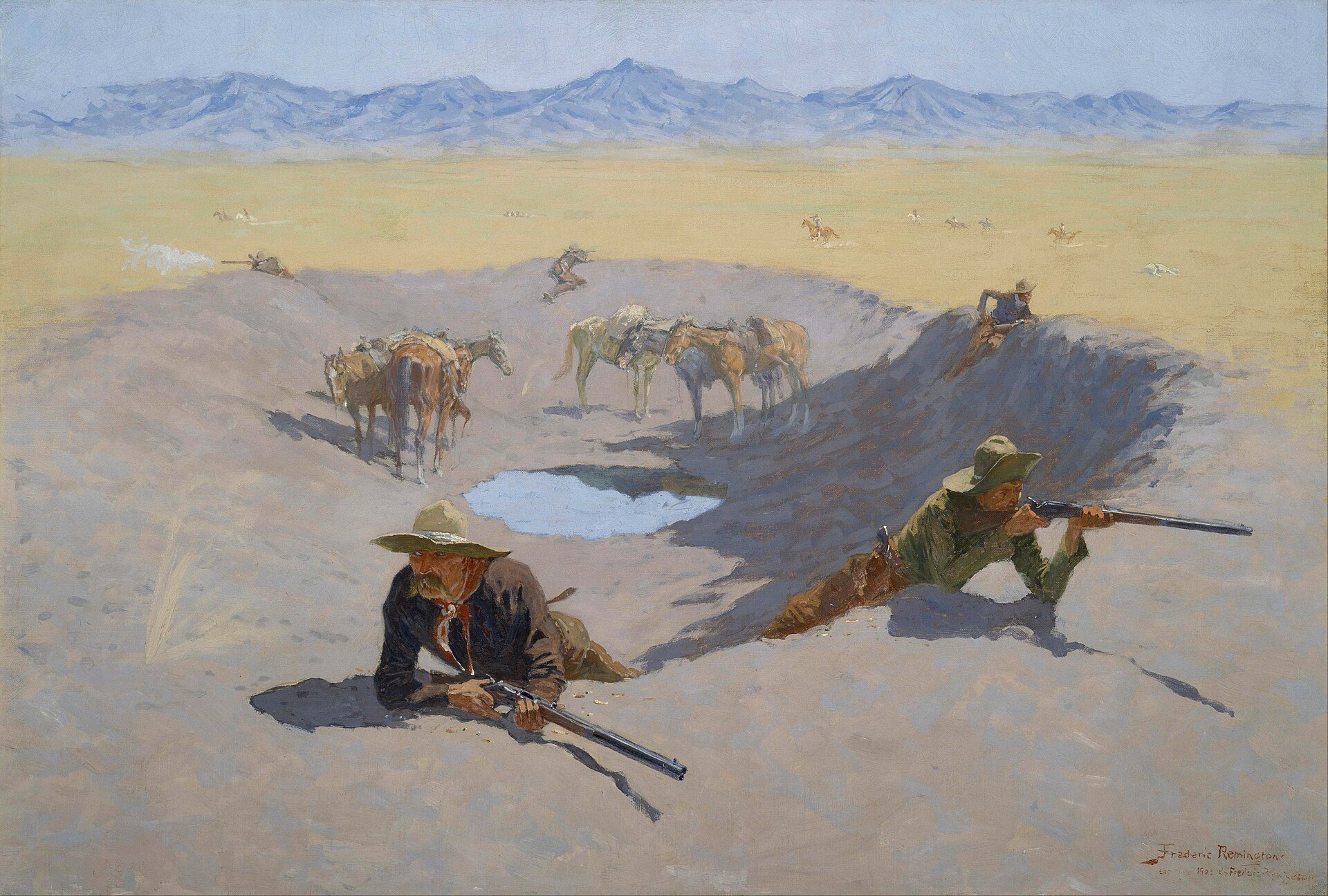
Their flight ended at what has since become known as the Battle of Stone Corral, where a posse dispatched from Visalia opened fire on the fugitives. Evans gave himself up, but not before the gunfight cost him an eye and his left arm. Sontag, discovered hiding in straw and manure near an abandoned cabin at the corral, suffered grave wounds to his chest and forehead; he later died in custody in Fresno, whether from those injuries or from tetanus remains uncertain.
His remains rest at Calvary Cemetery in Fresno, though the tombstone mistakenly records his death year as 1892 rather than 1893, leaving the inscribed age of 33 years, 6 months, and 4 days incorrect as a result.
Contant, meanwhile, had already been sent to Folsom State Prison following his October 1892 conviction for train robbery, where he would spend fifteen years behind bars. Once free, he penned a memoir titled A Pardoned Lifer, with Opie Warner serving as his ghostwriter, and took to the lecture circuit in cities including Milwaukee and Minneapolis, as well as at the Mankato Opera House, warning audiences against a life of crime. Around 1915 he made a motion picture called The Folly of a Life of Crime, though no copies of it survive today. What became of him afterward is largely unknown, though his mother's 1929 obituary placed him in San Francisco at that time
Written by Aubrey Research from John Sontag on Wikipedia, cited as a reference and not reproduced.
Where these engagements were fought
All 1 are placed on the map. Select a marker to see the engagement.
Red markers are surveyed battlefields with a mapped boundary; navy markers are point-located engagements. Select a marker to open its page.
Documented engagements
| Engagement | State | Year | Outcome | Forces or losses |
|---|---|---|---|---|
| Posse search for Evans and Sontag | CA | 1893 | Inconclusive | posse of one hundred men |
Engagements and locations are compiled from published sources: Chronicling America, Library of Congress (contemporary newspaper reporting, public domain; passages cited, not reproduced).