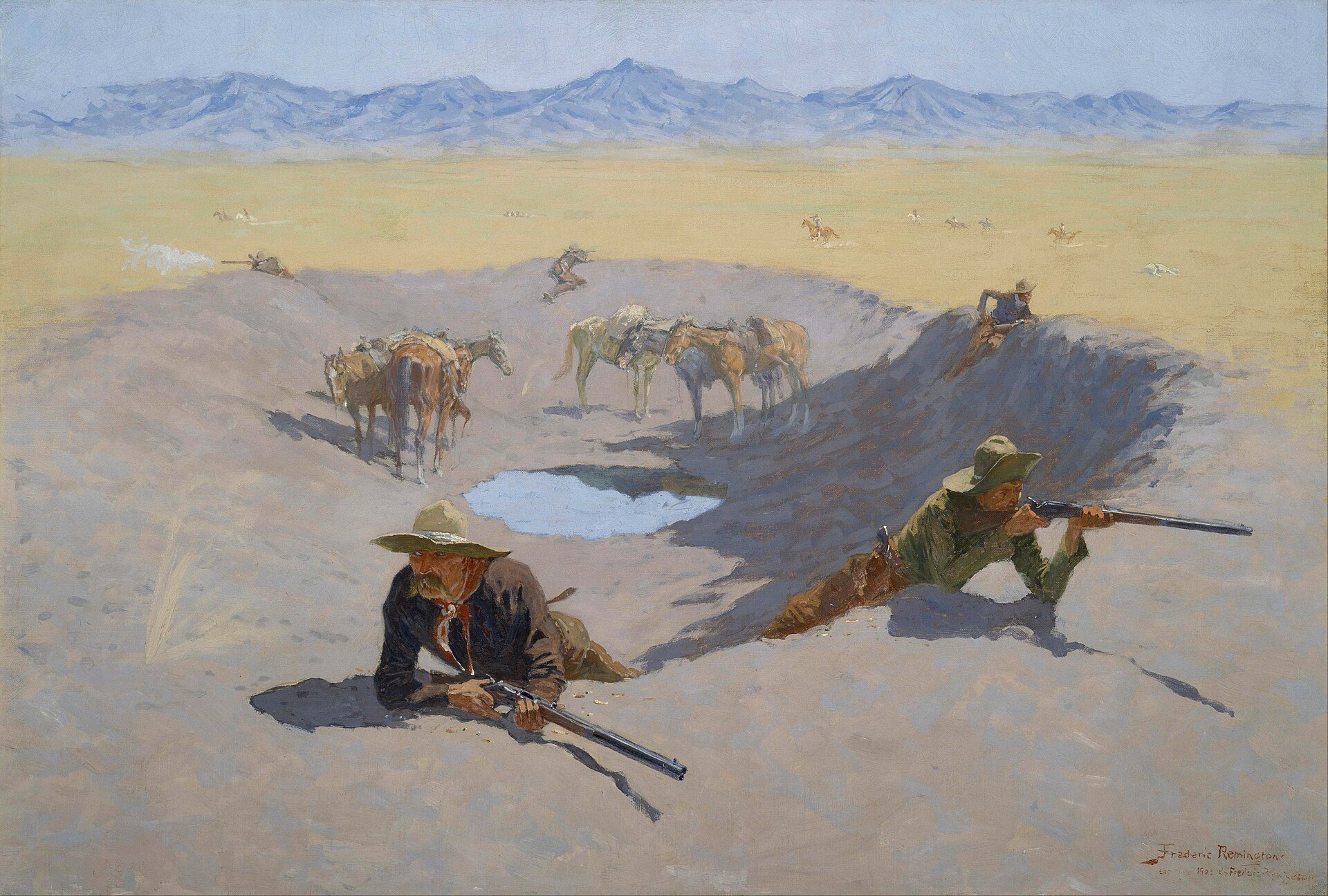
Between 1882 and 1892, the rugged terrain of Pleasant Valley, Arizona, became the stage for a brutal range war that would later carry several names, including the Tonto Basin Feud, the Tonto Basin War, and the Tewksbury-Graham Feud. At its heart stood two rival clans, the Grahams and the Tewksburys, locked in a deadly rivalry. The Grahams built their livelihood on cattle ranching, and the Tewksburys, who counted Native American heritage among their family, began in the same trade before expanding into raising sheep.
Gila County, Arizona, contains Pleasant Valley itself, though much of the drama connected to this feud unfolded across the borders in Apache and Navajo counties. Towns like Holbrook and Globe witnessed some of the conflict's deadliest confrontations. What began as a dispute pitting the Tewksburys and Grahams against an established cattleman named James Stinson eventually widened to draw in additional cattlemen's groups, sheep ranchers, hired shooters, cowhands, and law enforcement figures from across Arizona. Roughly ten years passed before the violence finally ceased, with the years 1886 and 1887 proving the deadliest, and a final killing recorded in 1892.
No range conflict in American history claimed more lives than this one, with death tolls estimated between 35 and 50, leaving the male lines of both families almost entirely wiped out. This brutal chapter cemented a belief that Arizona Territory remained unfit for statehood, a status it would not achieve until 1912. In the decades following its conclusion, numerous books and articles have chronicled the story of this violent feud.
1886-1887
A Navajo herder working for the Tewksburys was tending sheep near the Mogollon Rim in February 1887. Up to that point, an unspoken boundary along the rim had kept sheep from crossing into forbidden territory. Tom Graham ambushed the herder, shot him dead, cut off his head, and buried the body on the spot where he fell.
By August 1887, Mart Blevins, patriarch of the Blevins clan, suspected the Tewksburys had stolen some of his horses and set out searching for them. He vanished without a trace, and later his horse and rifle turned up close to the Tewksbury property. His sons Andy, Charlie, and one-armed Hamp saddled up to hunt for their missing father across Tewksbury land. Hamp made his way to the Hashknife camp, picking up cowboys John Payne, Thomas Carrington, and Robert Gillespie along the route. A Tewksbury rival, Tom Tucker, also joined the search party. Eventually the group located Tewksbury men at a sheepherder's ranch belonging to George Newton. When Hamp and his companions asked Newton for food, Ed Tewksbury appeared instead and ordered them off the property. Guns came out on the Tewksbury side, sparking a gunfight that left Hamp Blevins and John Payne dead. When the Grahams later returned to collect the bodies, they discovered the ranch reduced to ashes, with no sign of any Tewksburys.
William Graham was gathering his family's horses on August 17, 1887, when a bullet tore into his stomach. Though gravely wounded, he managed to ride home, arriving with his intestines spilling from the injury. Before dying, he named Ed Tewksbury as his killer to his brothers. Yet Apache County Deputy Sheriff James D. Houck, a Tewksbury supporter, later admitted that he himself had fired the shot, claiming he had confused Willy for his brother John Graham. Many valley residents suspected this confession was merely a cover story meant to protect Ed Tewksbury from blame. By the time lawmen arrived to arrest Ed for young William's killing, he had already escaped into the hills.
In September 1887, Graham loyalists rode toward the Tewksbury cabin under cover of early morning darkness. Concealed in the brush, they watched John Tewksbury Jr. and William Jacobs emerge to round up horses, then gunned both men down. The attackers then turned their fire on the cabin itself, exchanging shots with those inside for hours while hogs began feeding on the corpses of Tewksbury and Jacobs outside. Some accounts claim the Grahams refused any pause in hostilities, yet Eva Tewksbury, John's wife, stepped outside carrying a shovel. Gunfire ceased long enough for her to dig shallow graves for her husband and his friend before shooting resumed once she returned indoors, though no additional deaths came that day. Historian Joseph G. Rosa challenged this version of events, arguing instead that the bodies remained where they had fallen until the following morning. Eva herself was eight and a half months into her pregnancy at the time. The Grahams fled quickly once lawmen drew near their position.
Within days, Andy Blevins, a Graham faction leader, was overheard in a Holbrook store boasting about personally killing both John Tewksbury and William Jacobs.
Commodore Perry Owens, recently elected as Apache County's sheriff, had traded cowboy life for law enforcement and carried a reputation as a skilled gunman capable of firing accurately with a pistol in each hand. His past skirmishes with nearby Apaches and Navajo had already made his name known. The Blevins family, meanwhile, was infamous for cattle rustling and ruthless killings throughout the territory and beyond. Once Owens learned where the Blevinses were staying, he rode solo to their Holbrook house carrying a Winchester rifle to serve a warrant.
Twelve Blevins family members occupied the house that day. Owens announced he held a warrant for Andy Blevins and called for him to step outside, but Andy refused. Instead, his half-brother John Blevins emerged through the front door firing
1888-1892
In the years following 1887, the feud claimed more lives through lynchings and murders that were never solved, many carried out by men wearing masks. Natural causes finally took the elder John Tewksbury. George Newton, who stood among the Tewksbury allies, drowned in the Salt River while heading toward either his ranch or a planned meeting with Ed Tewksbury, and suspicion fell on the Grahams, a belief shared by his own family. Newton's widow put up ten thousand dollars for whoever could recover her husband's remains, yet his body was never located. The killing continued between the two sides until barely anyone remained on either.
Having lost nearly all his relatives and supporters, Tom Graham abandoned his home in Prescott and made his way to the Salt River Valley, eventually settling in Tempe, where he married Annie Melton, a minister's daughter. He hoped to sell off his stock and build a fresh start in this new place. That plan ended on August 2, 1892, when Tom Graham, by then the sole surviving member of the Graham side in the conflict, was delivering wheat from a store and was shot from behind by two hidden gunmen. They called out his name, and as he turned to look, a rifle round struck him in the back. In his final moments he identified his killers as Ed Tewksbury and John Rhodes.
Suspicion for the killing fell on Ed Tewksbury, who secured the noted Arizona lawyer Thomas Fitch for his defense. A legal technicality forced a mistrial the first time around. During those proceedings, Annie, Tom's widow, tried to shoot Ed herself, but her pistol snagged in her dress, and court officers hustled her out. A second trial followed, but the jury split seven to five in favor of acquittal. More than a hundred witnesses took the stand, and several, among them two young women named Gregg and Cummings along with a Winslow cowboy called A.J. Steneel, testified that Ed was indeed one of the killers. Nonetheless, the jurors ultimately concluded that Ed had not actually been at the murder scene, and the case was closed. Ed Tewksbury lived until April 1904, when he died in Globe, Arizona. By then not a single Graham survived to seek vengeance against him, and no one remained on his own side who might have faced retribution had he been killed instead. Shortly before he passed, Ed admitted to his stepmother that he had indeed murdered Tom Graham, explaining that he had strung horses along the road to Tempe to carry out the act. For generations afterward, members of the Tewksbury family held to this account long after the feud itself had faded into history.
Not long after Tom Graham's murder, a young man by the name of Yost was killed while passing through Reno Pass along the Tonto Basin road. Yost had ties to the Graham side, and accounts at the time attributed his death to the Apache Kid.
Aftermath
Among all those drawn into the Pleasant Valley War, Edwin Tewksbury outlived every other participant, passing away in Globe, Arizona in April 1904. Visitors to the cemetery in Young, Arizona can still find the resting places of numerous men who lost their lives in the conflict, and the old Perkins Store remains standing today, now serving as a museum. Estimates place the death toll somewhere between 35 and 50 people, a count that includes local vigilantes and hired hands and cowboys who fought on both sides of the dispute. Legal consequences rarely followed, as arrests by law enforcement proved uncommon throughout the feud. Together with the Apache Wars still raging at the time, this bloody range conflict fed resistance in Washington toward granting Arizona statehood, since numerous legislators pointed to the violence as evidence that the territory lacked the civilized order necessary for joining the Union.
Written by Aubrey Research from Pleasant Valley War on Wikipedia, cited as a reference and not reproduced.
Where these engagements were fought
All 1 are placed on the map. Select a marker to see the engagement.
Red markers are surveyed battlefields with a mapped boundary; navy markers are point-located engagements. Select a marker to open its page.
Documented engagements
| Engagement | State | Year | Outcome | Forces or losses |
|---|---|---|---|---|
| Pleasant Valley (Tewksbury-Graham) Feud - Sheriff Mulvenon posse shootout | AZ | 1887 | Posse victory | John Graham and J. Blevins shot dead; all Grahams killed… |
Engagements and locations are compiled from published sources: Chronicling America, Library of Congress (contemporary newspaper reporting, public domain; passages cited, not reproduced).