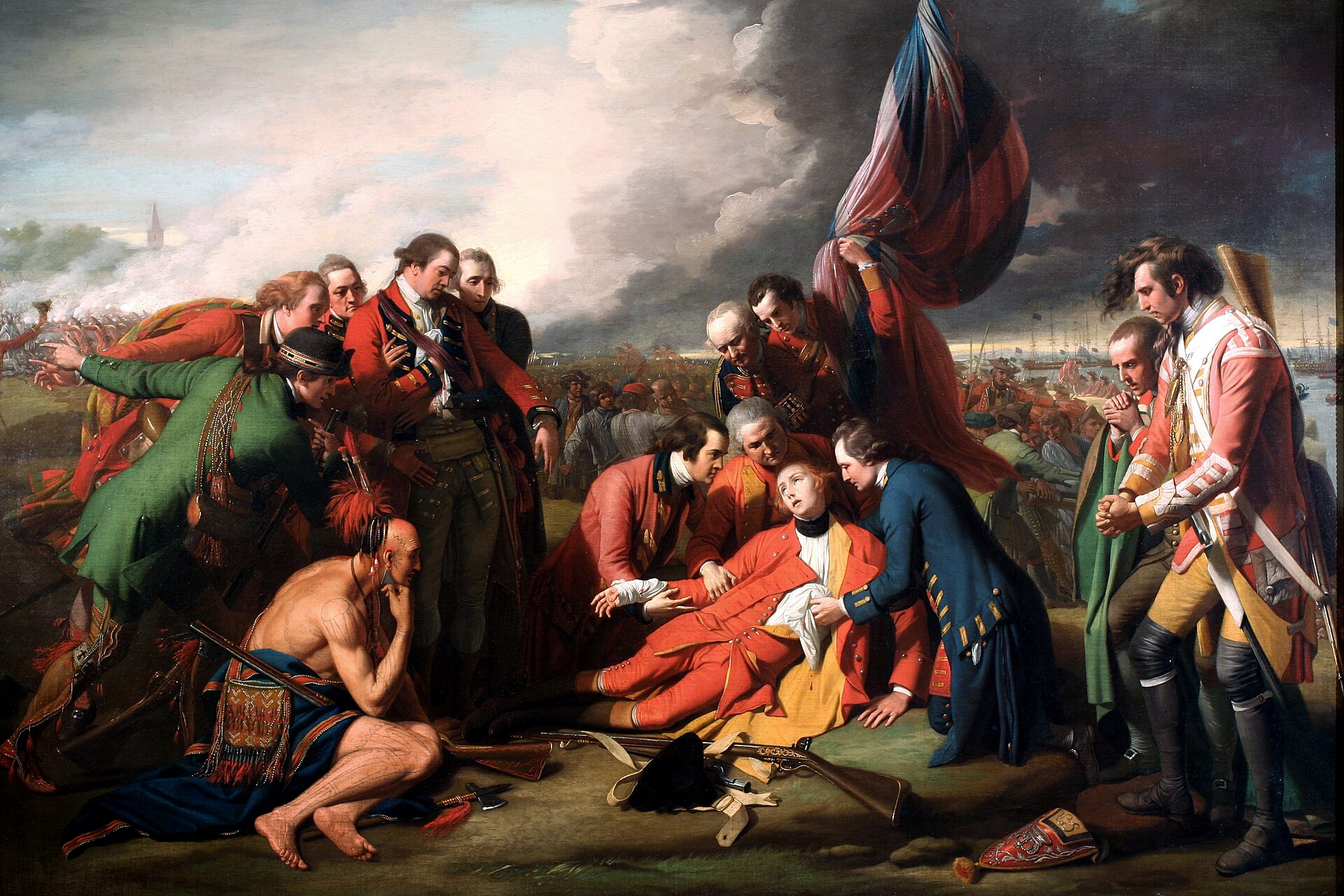
Fought between 1702 and 1713, Queen Anne's War formed the second episode in a broader pattern of French and Indian Wars waged across North America, drawing in the colonial powers of Great Britain, France, and Spain. Within the United States, historians treat it as a distinct and self contained conflict, while in other parts of the world it is understood as North America's portion of the War of the Spanish Succession. The struggle carries additional names as well: some call it the Third Indian War, and the French referred to it as the Second Intercolonial War.
Course of the war
Around the dawn of the eighteenth century, leading figures among both the French and English recognized that whoever held sway over the Mississippi River would shape the region's future commerce and growth, and each side crafted ambitious schemes to undercut the other. Pierre Le Moyne d'Iberville, the French Canadian explorer, had drafted his "Project sur la Caroline" following the prior conflict, outlining a strategy of building alliances with Indigenous peoples throughout the Mississippi basin and then using those bonds to drive English settlers off the continent altogether, or at minimum confine them to the coastline. Acting on this scheme, he located the Mississippi's mouth, first discovered by La Salle back in 1670, and founded Fort Maurepas in 1699. Operating out of this outpost along with Fort Louis de la Mobile, established in 1702, he cultivated ties with nearby Choctaw, Chickasaw, and Natchez communities, among others.
Meanwhile, traders and explorers out of Carolina had woven together a far-reaching commercial web spanning the southeastern continent, stretching as far as the Mississippi itself. These colonists held little regard for Florida's Spanish population, yet they grasped clearly the danger that French settlement along the coast represented. Both Joseph Blake, governing Carolina, and James Moore, who succeeded him, envisioned pushing outward to the south and west, gaining ground at French and Spanish expense.
Before fighting erupted in Europe, Iberville had already reached out to Spanish authorities in January 1702, urging that Apalachee fighters be equipped and sent to strike at English settlers and their Indigenous partners. Spain responded by assembling a force under Francisco Romo de Uriza, which departed Pensacola, Florida that August, bound for trading posts in Carolina's interior. Forewarned of the approaching expedition, the English arranged a defensive stand near the Flint River's headwaters, where they crushed the Spanish-led column, killing or capturing roughly five hundred of the accompanying Indigenous warriors.
Word of these hostilities reached Governor Moore in Carolina, prompting him to assemble and command a force against Spanish-held Florida. Leading five hundred colonial soldiers and militiamen alongside three hundred Indigenous allies, he seized and set fire to St. Augustine during the 1702 siege of that Florida town, though the main fort held out, forcing an English withdrawal once a Spanish fleet arrived from Havana. Four years later, in 1706, Carolina turned back a combined Spanish and French seaborne assault on Charles Town launched from Havana.
Spanish Florida's Apalachee and Timucua populations were nearly annihilated during a campaign Moore led, remembered afterward as the Apalachee massacre of 1704. Survivors of this onslaught were largely resettled along the Savannah River, confined thereafter to reservation lands. In subsequent years, raiding persisted through large Indigenous war parties, occasionally joined by a handful of white colonists, culminating in sizable campaigns against Pensacola in 1707 and against Mobile in 1709. Armed and directed by English colonists, the Muscogee, Yamasee, and Chickasaw peoples gained the upper hand throughout these clashes, largely at the cost of the Choctaw, Timucua, and Apalachee.
Consequences
Losing Newfoundland and Acadia squeezed French holdings on the Atlantic down to just Île-Saint-Jean, known today as Prince Edward Island, and Île-Royale, now called Cape Breton Island. Settlers who had lived in Newfoundland relocated to these islands, and in the years that followed France built the Fortress of Louisbourg there. Because France kept a foothold in the region and retained access to fish along the Newfoundland shore, tension between French and British fishing interests dragged on for decades, not settling completely until near the close of the eighteenth century. Newfoundland's economy suffered greatly from the war, its fishing fleets shrinking substantially. Once peace was signed, the British fleet began rebuilding almost at once and tried to keep Spanish vessels away from Newfoundland's waters, just as they had done before the conflict. Yet plenty of Spanish crews simply sailed under English flags of convenience, using straw owners to slip past British restrictions.
Britain's seizure of Acadia reshaped life for the Acadians and the Mi'kmaq for generations afterward. Britain's grip on Nova Scotia was shaky at first, a weakness that French agents and Mi'kmaq resistance figures exploited. In the years after the war, Britain's dealings with the Mi'kmaq unfolded alongside British growth both in Nova Scotia and along Maine's coastline, where settlers from New England pushed into Abenaki territory, frequently breaking earlier treaty commitments. The Peace of Utrecht made no mention of either the Abenaki or the Mi'kmaq, and the two groups read the 1713 Portsmouth agreement quite differently than the New
Written by Aubrey Research from Queen Anne's War on Wikipedia, cited as a reference and not reproduced.
Where these engagements were fought
All 97 are placed on the map. Select a marker to see the engagement.
Red markers are surveyed battlefields with a mapped boundary; navy markers are point-located engagements. Select a marker to open its page.
By decade
The tempo of the war, by decade.
Notable engagements
| Engagement | State | Year | Outcome | Forces or losses |
|---|---|---|---|---|
| Battle of Flint River | GA | 1702 | English and allied victory | Pro-Bourbon SpainApalachee: most killed or captured… |
| Northeast Coast campaign (1703) | ME | 1703 | French and Indian victory | 150+ English killed or captured |
| Raid on Deerfield | MA | 1704 | French-Indian victory | 56 killed, 112 captured |
| Lefebvre's Charles Town expedition | SC | 1706 | English victory | England; Province of Carolina: Unknown |
| Siege of St. Augustine (1702) | FL | 1702 | Spanish victory | Kingdom of Spain; New Spain: Reports vary; light; Kingdom… |
| March's reprisal at Pigwacket (1703) | ME | 1703 | 6 killed, 6 captured (natives) | |
| Attack on Hampton village | NH | 1703 | 5 English killed | |
| Attack on Pascommuck garrison | MA | 1704 | 19 killed, ~37 captured | |
| Attack on a house in Reading | MA | 1707 | woman and 3 children killed, 5 carried off | |
| Shallop fight at Winter Harbor | ME | 1707 | 1 English killed; ~9 Indians slain | |
| Hilton's surprise at Black Point | ME | 1707 | about 21 Indians killed, 1 captured | |
| Attack at Winter Harbor | ME | 1710 | 2 women killed, 2 men captured |
Plus 85 further documented engagements in the Queen Anne's War record.
By state
Engagements and locations are compiled from published sources: Wikipedia (text rewritten and cited as a reference, CC BY-SA 4.0); Sylvester, Indian Wars of New England (1910) (public domain).