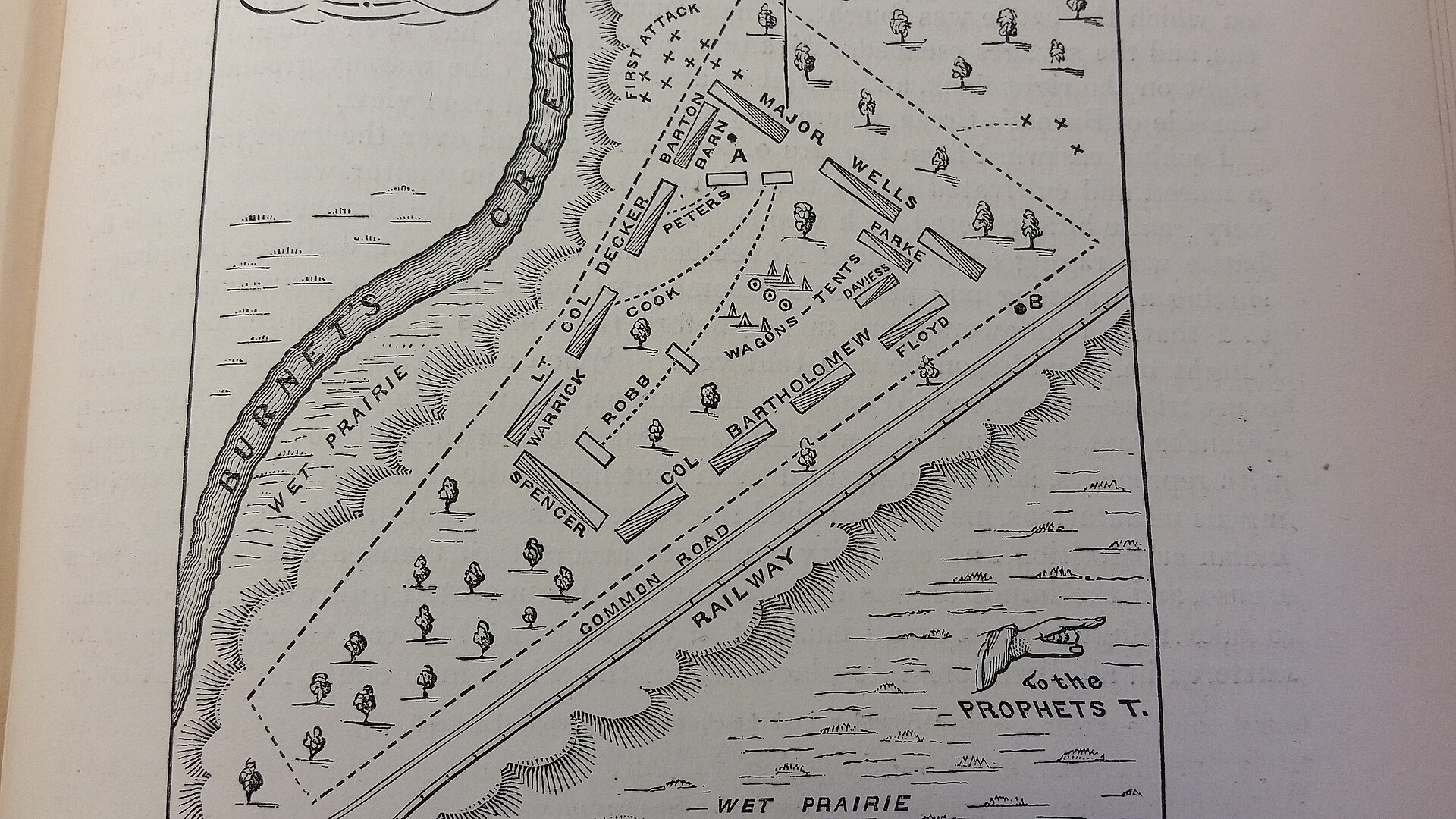
Control over the Northwest Territory sparked a prolonged military struggle between the United States and an alliance of Native American peoples who identified themselves as the United Indian Nations, a group now more commonly recognized as the Northwestern Confederacy. Within the annals kept by the United States Army, this clash stands as the earliest of what would become known as the American Indian Wars.
The territory in question had long been contested ground, with Native Americans and European powers vying for dominance there over many generations. That struggle shifted decisively when Great Britain handed over the lands of the Northwest Territory to the newly established United States through the Treaty of Paris in 1783. This agreement set the Great Lakes as the dividing line separating British North America from American soil, granting the United States authority over the Ohio Country and Illinois Country, regions that had previously been closed off to European settlers. Once American settlers began pushing into this territory, they encountered fierce opposition from the Native peoples already living there. In response, a confederacy led by the Wyandot took shape in 1785, aiming to push back against the American advance onto their homelands.
The confederacy had existed for four years when the newly ratified Constitution took effect, bringing George Washington into office as president and, with that role, command over every branch of American military power. Washington then instructed the Army to assert American authority throughout the Northwest Territory. Composed largely of inexperienced soldiers supplemented by militia volunteers, the Army suffered repeated humiliating losses during this effort, among them the failed Harmar campaign of 1790 and the catastrophe known as St. Clair's defeat the following year, both of which rank among the most severe setbacks the Army has ever endured.
The devastation at St. Clair's defeat left the bulk of the Army in ruins and exposed frontier settlers to further danger. In response, Washington turned to General Anthony Wayne to rebuild the shattered force. Wayne restructured the Army into what became known as the Legion of the United States in 1792, devoting an entire year to training the men and ensuring they were properly equipped. From there, he guided a deliberate, carefully planned advance through the Great Miami and Maumee river valleys within the Ohio Country, culminating in a crushing triumph at the Battle of Fallen Timbers near Lake Erie in 1794. Following this victory, Wayne established Fort Wayne at Kekionga, the Miami capital, and the beaten confederacy found itself compelled to surrender vast stretches of land, including much of what is now Ohio, under the terms of the Treaty of Greenville signed in 1795. This conflict secured American dominance over the Northwest Territory for a time, though British troops would return to invade the region during the War of 1812.
Background
Between 1754 and 1763, the French and Indian War stripped France of its North American holdings, transferring them to Great Britain, including the Ohio and Illinois countries lying south of the Great Lakes. Throughout this conflict, tribes native to the area chose sides based on whichever imperial power better served their political and economic interests. When the Treaty of Paris concluded the war in 1763, France handed the territory over to British control. That same year, a coalition of Indigenous peoples rose up in Pontiac's War, attempting to push the British out entirely. Hoping to prevent renewed fighting, Britain responded with the Royal Proclamation of 1763, establishing a dividing line separating settler territory from Native lands.
Five years later, British negotiators struck the Treaty of Fort Stanwix with the Iroquois, who claimed dominion over the Ohio Country. This agreement shifted the boundary westward and opened land south of the Ohio River to colonial expansion. Colonial figures of influence, including George Washington, formed land companies and acquired grants, while settlers flooded into the newly available territory. The Shawnees and Cherokees, who relied on what is now Kentucky as hunting territory, had never been part of the negotiations and rejected the notion that the Iroquois held authority to sell that land. During the early 1770s, the Shawnees attempted to build a fresh alliance of tribes capable of resisting settler encroachment, but British agents managed to keep them isolated by leveraging Iroquois cooperation. Consequently, when the Shawnees fought Lord Dunmore's War in 1774 with only limited support from Mingo allies, they suffered defeat and were forced to accept the Ohio River as the dividing line between colonial and Native territory.
Seeking tighter control over the frontier region, Parliament enacted the Quebec Act that same year, folding the entire area into the Province of Quebec and invalidating existing colonial claims to the land. This move enraged American colonists who had their sights set on owning or settling the territory, and it became one of the grievances feeding into their eventual declaration of independence in 1776. During the western campaigns of the Revolutionary War that followed, numerous Native nations sided with Britain in hopes of expelling American settlers from their lands.
When the war ended with the 1783 Treaty of Paris, Britain transferred the region to the newly formed United States without addressing any Native claims to the land whatsoever. Technically, the Native nations remained in a state of war against the United States. Richard Butler told them bluntly that the British had abandoned them, handing their country over to the Americans. Yet George Washington counseled Congress that keeping peace with Native nations was crucial for settling western lands successfully. Rather than pursuing costly military conquest, he urged that treaties and purchase agreements should be the means of acquiring Native territory. Washington's generation expected that ongoing American settlement would naturally, over time, push Native peoples out of the way.
Joseph Brant, a Mohawk leader who had allied with the British during the Revolution, reacted with shock upon discovering that England had essentially sold out the Indians to Congress. He subsequently spearheaded the creation of the Northwestern Confederacy in 1783, described as the most ambitious pan-tribal alliance ever attempted up to that point. Speaking at the Wyandot settlement of Junquindundeh, now known as Fremont, Ohio, Brant insisted that all tribes held Native lands in common, meaning no cession could occur without the confederacy's collective approval. Present at this gathering were delegates from the Iroquois, Shawnees, Lenapes, Wyandots, and the Three Fires (comprising the Ojibwe, Odawa, and Potawatomi), along with a small number of Cherokees and Muscogee representatives.
In subsequent years, individual states surrendered their claims to this territory to the federal government, which planned to pay off Revolutionary War debts through land sales north of the Ohio River to American settlers. Rather than acknowledging the Native confederacy's authority, American officials adopted a strategy of division, informing tribes that their lands had already been forfeited through conquest. Washington's administration then sought to formalize this claim through treaties whose terms the Americans themselves dictated. Under this pressure, certain Native leaders relented and ceded territory at Fort Stanwix in 1784, Fort McIntos
Key figures
The Northwest Indian War produced a number of individuals whose names would resonate well beyond the conflict itself. William Henry Harrison, William Clark, Meriwether Lewis, and Tecumseh all served in this struggle before achieving lasting fame in other arenas. William Wells stands apart for having fought on both sides during the fighting, and he would eventually meet his end at the Battle of Fort Dearborn.
On the American side, Henry Knox held the position of the nation's first Secretary of War. Josiah Harmar served as Brigadier General over the First American Regiment and directed the failed 1790 campaign that bears his name. Arthur St. Clair governed the Northwest Territory and, as Major General, suffered the defeat now associated with his own name. Anthony Wayne took command as Major General of the Legion of the United States and led it to victory at Fallen Timbers. Charles Scott, a Brigadier General, headed the Kentucky militia throughout Wayne's operations. James Wilkinson served as Lieutenant Colonel overseeing Fort Washington, acted as Wayne's second in command, and secretly worked as a Spanish spy.
Among the confederacy's leadership, Little Turtle held the position of Sagamore, or chief, within a Miami band and earned renown as a war leader. Blue Jacket functioned as the Shawnee's chief war leader and stood as the confederacy's foremost military figure. Egushawa led as an Odawa chief whose influence carried significant weight within the alliance. Buckongahelas, a Lenape or Delaware chief, fought against the United States and maintained a close partnership with Blue Jacket. Roundhead, also called Stayeghtha, led as a Wyandot chief and took part in the fighting at Fallen Timbers. Joseph Brant, a leading figure among the Mohawk, played a key role in establishing the Northwest Confederacy.
On the British side, Sir Guy Carleton, known as Lord Dorchester, served as Commander-in-Chief of British North America. William Campbell held the rank of Major and commanded Fort Miamis. John Graves Simcoe governed as Lieutenant Governor of Upper Canada. Alexander McKee worked within the British Indian Department, first as Deputy Agent and later rising to Deputy Superintendent General.
Written by Aubrey Research from Northwest Indian War on Wikipedia, cited as a reference and not reproduced.
Where these engagements were fought
7 of the 9 could be placed to a location and appear on the map; the remaining 2 are recorded without a precise point. Select a marker to see the engagement.
Red markers are surveyed battlefields with a mapped boundary; navy markers are point-located engagements. Select a marker to open its page.
Documented engagements
| Engagement | State | Year | Outcome | Forces or losses |
|---|---|---|---|---|
| Harmar Campaign | OH | 1790 | Northwestern Confederacy victory | ~120-150 killed or wounded vs 262 killed ; 106 wounded |
| Siege of Dunlap's Station | IN | 1791 | American victory | 2 killed vs ~12-15 killed |
| Battle of Kenapacomaqua | IN | 1791 | American victory | 2 killed ; 1 wounded vs 9 killed ; 34 captured |
| St. Clair's Defeat | OH | 1791 | Northwestern Confederacy victory | 21 killed ; 40 wounded vs 656 killed or captured ; 279… |
| Battle of Fallen Timbers | OH | 1794 | United States victory | 33 killed ; 100 wounded vs 25-40 killed |
| Battle of Fort Recovery | OH | 1794 | American victory | 35 killed ; 43 wounded; 20 missing vs ~17-50 killed ; ~100… |
| Big Bottom Massacre | WV | 1791 | ||
| Battle of the Embarras River | IL | 1786 |
By state
Engagements and locations are compiled from published sources: Wikidata (structured data, CC0); Wikipedia (text rewritten and cited as a reference, CC BY-SA 4.0).