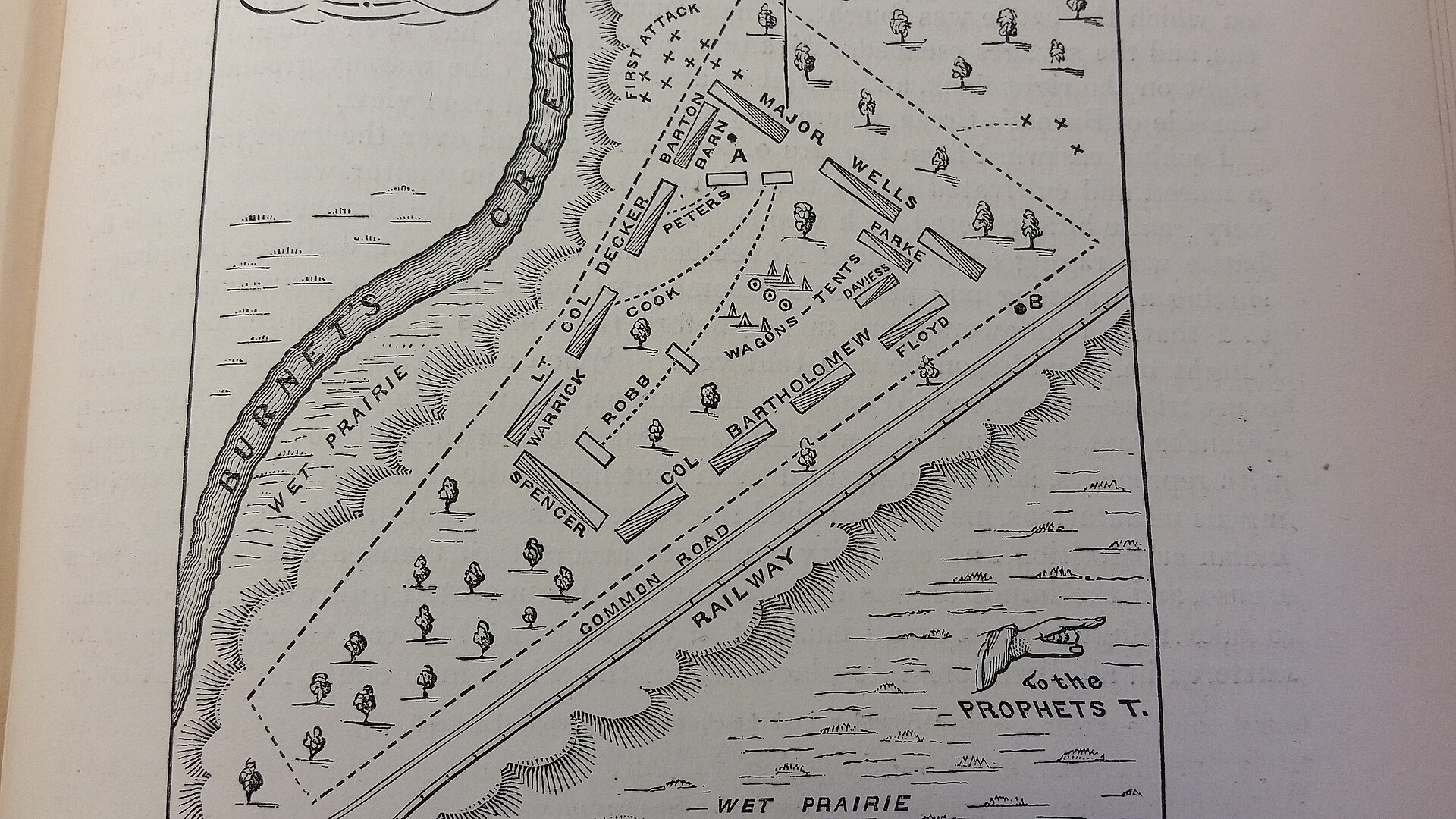
Between roughly 1816 and 1858, three separate but related conflicts pitted the United States against the Seminoles across Florida, together known as the Seminole Wars or the Florida Wars. Rather than treating them as distinct episodes, the Seminole Tribe of Florida regards this history as a single continuous struggle, since periods without direct fighting against the Army still brought violence from settlers, militias, lawmen, and slavecatchers targeting the Seminole people.
The Seminole nation itself formed in northern Florida in the early eighteenth century, back when Spain still held the territory as a colony. As American settlement expanded following independence, friction developed in the early 1800s between these settlers and the Seminoles, largely because enslaved people kept escaping across the border from Georgia into Spanish-held Florida, which led slaveowners to launch raids into Spanish territory to reclaim them. These border skirmishes escalated into the First Seminole War when Andrew Jackson brought American troops into Florida, ignoring Spanish protests, in order to hunt down the Seminoles. His campaign leveled multiple Seminole, Mikasuki, and Black Seminole settlements, seized San Marcos de Apalache, and led to a temporary occupation of Pensacola before Jackson pulled his forces out in 1818. The following year, Spain and the United States settled Florida's fate through the Adams-Onís Treaty.
Florida formally passed to American control in 1821, after which the Seminoles were pressured through the Treaty of Moultrie Creek into abandoning the panhandle for a sprawling reservation carved out in the peninsula's interior. This arrangement did not last: the Treaty of Payne's Landing in 1832, pushed by President Andrew Jackson's administration, insisted the Seminoles abandon Florida entirely in favor of Indian Territory, present-day Oklahoma, under the terms of the 1830 Indian Removal Act. Those Seminoles who rejected removal fought back, sparking the Second Seminole War, which lasted from 1835 to 1842 and proved far longer and more extensive than either of the other two conflicts. At the outset, a Seminole fighting force numbering under 2,000 relied on guerilla tactics and superior familiarity with the terrain to outmaneuver and wear down an American military and Marine presence that eventually swelled past 30,000 troops. Rather than continuing to chase these elusive bands, U.S. commanders shifted tactics, concentrating instead on locating and destroying concealed Seminole villages and food supplies, a strategy meant to force resisters into surrender through hunger or watch their families suffer the consequences.
By 1842, some 3,612 Seminoles had been forced into Indian Territory, though a small remnant, somewhere between 350 and 500 people, stayed behind in Florida under a fragile and uneasy peace. That calm broke down once again when the Armed Occupation Act of 1842 opened land south of Tampa to new settlement, provoking fresh conflict that ignited the Third Seminole War in 1855. When active combat finally ceased in 1858, the handful of Seminole bands still remaining in Florida had retreated deep into the Everglades, into swampland that held no appeal for American settlers.
Taken together, these conflicts stand as both the lengthiest and the costliest of all the American Indian Wars.
First Seminole War
Historians disagree on precisely when this conflict started and ended. According to the U.S. Army Infantry, the fighting spanned 1814 to 1819. A study examining the regular army of that period notes that Jackson's determination was already apparent by 1814, describing it as part of a broader trend in which confident military commanders kept pushing past the limits of civilian oversight along a chaotic southern border, putting the separation of powers at risk. The Naval Historical Center of the U.S. Navy places the conflict between 1816 and 1818, while another Army source narrows it to 1817 to 1818. Meanwhile, the historical record kept by the 1st Battalion, 5th Field Artillery locates the entire war within 1818 alone.
By March 1818, Jackson had assembled his troops at Fort Scott. His force included 800 regular Army soldiers, 1,000 volunteers from Tennessee, 1,000 Georgia militiamen, and roughly 1,400 Lower Creek warriors allied with the Americans, serving under Brigadier General William McIntosh, himself a Creek chief. On March 15, Jackson's men crossed into Spanish Florida, following the Apalachicola River southward. Upon arriving at the ruins of the Negro Fort, Jackson ordered the construction of a replacement, which became Fort Gadsden. From there the army pushed toward the Mikasuki settlements near Lake Miccosukee. On March 31, troops burned the Red Stick village located at what is now Tallahassee and seized two Native American captives there; the following day they took the town of Miccosukee itself. In total, more than 300 Indian dwellings were destroyed during this campaign. Jackson then redirected his force southward, arriving at Fort St. Marks, also called San Marcos, on April 6.
Once at St. Marks, Jackson sent word to the fort's commandant, Don Francisco Caso y Luengo, informing him that the invasion of Florida had come at the President's direction. He claimed that the captured wife of Chief Chennabee had revealed that Seminoles were obtaining ammunition from within the fort. Because of this, he argued, residents of the very Mekasukian towns he had just razed had effectively already taken control of the post, and American soldiers needed to garrison it to prevent a recurrence. He framed this move as an act of self defense. By portraying his actions as those of a "Friend of Spain," Jackson sought to convince Spanish authorities that they stood as allies with American forces against the Seminoles, thereby easing his path to controlling St. Marks. Luengo, in his reply, acknowledged the alliance but rejected the account involving Chennabee's wife, insisting the Seminoles had never seized ammunition or control of the fort. He also voiced concern over the difficulties he might face if American troops occupied the post without Spain's prior consent. Nonetheless, on April 7, Jackson took St. Marks despite Luengo's objections. Inside, he discovered Alexander George Arbuthnot, a Scottish merchant operating out of the Bahamas who conducted trade with Florida's Indians and had corresponded with both British and American officials on their behalf. Suspicion arose that he was arming the Indians and readying them for combat, a charge that carried some plausibility given that guns were essential for hunting deer, the primary commodity in the local trade.
Two Indian leaders, Josiah Francis, known as Hillis Hadjo or "the Prophet" (a figure distinct from Tenskwatawa), and Homathlemico, had been taken prisoner after rowing out to an American vessel flying the Union Flag anchored near St. Marks. The moment Jackson reached the fort, both men were brought to shore and hanged without any trial.
From St. Marks, Jackson advanced toward Bowlegs Town on the Suwannee River, targeting Maroons who had escaped there from the Negro Fort. This settlement, ruled by Chief Bolek, known as "Bowlegs," had become a base where the Maroons, under the Black Seminole leader Nero, had rebuilt their old British-style military organization and continued to resist. This community of free black resistance fighters was the true focus of the American offensive. On April 12, while marching toward the Suwannee, the army
First Interbellum
Spain handed Florida over to the United States through the Adams-Onís Treaty of 1819, though actual American occupation did not begin until 1821. Establishing working governance in the territory proved sluggish. Andrew Jackson took the post of military governor that March but did not reach Pensacola until July, then quit the job in September and headed home in October after barely three months on the job. William P. Duval succeeded him, though not until April 1822, and Duval himself soon departed for a lengthy stay back in Kentucky before that year closed. Turnover and absenteeism plagued nearly every territorial office in similar fashion.
The Seminoles remained a central concern for the fledgling administration. Early in 1822, Captain John R. Bell, serving as provisional secretary of the territory and acting temporarily as Seminole agent, drew up a count of the native population. His figures showed roughly 22,000 Indians and 5,000 enslaved people held by them. He judged that two-thirds of these people had fled to Florida following the Creek War and thus, in American eyes, held no legitimate claim to the land. Their settlements clustered around the Apalachicola River, stretched along the Suwannee, extended southeast to the Alachua Prairie, and continued southwest to just north of Tampa Bay.
From the outset, territorial leaders fretted over Seminole affairs. Without a treaty fixing a reservation, the Indians could not be certain where they might sow crops and later gather them, and meanwhile white squatters kept encroaching on lands they already occupied. No licensing system existed for traders, leaving unregulated dealers free to peddle liquor among the Seminoles. Yet the constant absences and replacements among officials meant that planned councils with the tribe were often called off, delayed, or reduced to nothing more than fixing a date for some future gathering.
By 1823 authorities had settled on confining the Seminole to a reservation in the peninsula's interior. Negotiations were arranged for early September at Moultrie Creek, just south of St. Augustine. Around 425 Seminoles turned out, and they chose Neamathla to speak as their principal representative. The resulting treaty compelled the Seminole to accept American protection and renounce every claim to Florida land, receiving in return a reservation spanning about four million acres, sixteen thousand square kilometers. This tract ran through the center of the peninsula, beginning just north of what is now Ocala and extending to a line level with the southern tip of Tampa Bay. Its boundaries sat well away from either coastline, intended to cut off contact with traders from Cuba and the Bahamas. Neamathla, along with five additional chiefs, was permitted to retain his village along the Apalachicola.
The Moultrie Creek agreement bound the United States to safeguard the Seminole so long as they obeyed the law. Washington was to furnish farming tools, livestock, and hogs, cover the costs and losses of relocation, and supply provisions for a full year while the tribe established new fields. The government further promised an annual payment of $5,000 for two decades, along with an interpreter, schooling, and a blacksmith over that same span. For their part, the Seminole agreed to permit road construction through the reservation and to capture and hand over any runaway slaves or other fugitives found there.
Putting the treaty into practice proved slow. Early in 1824, Fort Brooke rose on the spot where Tampa now stands, garrisoned by four infantry companies meant to signal that removal to the reservation was not negotiable. Yet by June, James Gadsden, chief architect of the treaty and the man tasked with carrying it out, was informing Washington that the Seminole resented the arrangement and hoped to reopen talks. Talk of renewed conflict began circulating. That July, Governor DuVal called up the militia and summoned the Tallahassee and Miccosukee chiefs to St. Marks, where he informed the Seminole they must relocate to the reservation by October 1, 1824.
Nothing had actually moved by that point, so DuVal started disbursing compensation for improvements the Seminole would abandon, hoping to spur the migration, and arranged for the promised rations to reach Fort Brooke for distribution. Eventually the Seminole did begin settling on the reservation, though within the year some drifted back to their old homes between the Suwannee and Apalachicola. By 1826 most had relocated, yet conditions there were harsh. Fresh fields had to be cleared, and what crops they managed suffered through prolonged drought, with some Seminoles reportedly dying of starvation. Both Colonel
Written by Aubrey Research from Seminole Wars on Wikipedia, cited as a reference and not reproduced.
Where these engagements were fought
13 of the 14 could be placed to a location and appear on the map; the remaining 1 are recorded without a precise point. Select a marker to see the engagement.
Red markers are surveyed battlefields with a mapped boundary; navy markers are point-located engagements. Select a marker to open its page.
Documented engagements
| Engagement | State | Year | Outcome | Forces or losses |
|---|---|---|---|---|
| Battle of Withlacoochee | FL | 1835 | American victory | 4 killed; 59 wounded vs Unknown |
| Dade battle | FL | 1835 | Seminole victory | 3 killed ; 5 wounded vs 108 killed ; 1 wounded |
| Dade Massacre | FL | 1835 | Seminole victory | 3 killed ; 5 wounded vs 108 killed ; 1 wounded |
| Battle of San Felasco Hammock | FL | 1836 | United States victory | 1 killed vs 5 wounded |
| Battle of Lake Okeechobee | FL | 1837 | Seminole victory | 26 killed (mainly officers); 112 wounded vs 11 killed; 14… |
| Battle of Pine Island Ridge | FL | 1838 | Seminole victory | 1 wounded vs None |
| Battle of Econfina River | FL | 1818 | ||
| Battle of Ouithlacoochie | FL | 1835 | ||
| Battle of Jupiter Inlet | FL | 1838 | ||
| Battle of the Caloosahatchee | FL | 1839 |
Plus 4 further documented engagements in the Seminole Wars record.
By state
Engagements and locations are compiled from published sources: Wikidata (structured data, CC0); Wikipedia (text rewritten and cited as a reference, CC BY-SA 4.0).