About this property
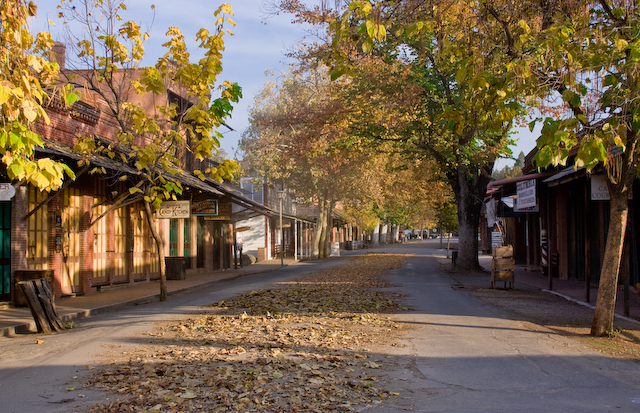
Columbia State Historic Park, also known as Columbia Historic District, is a state park unit and National Historic Landmark District preserving historic downtown Columbia, California, United States. It includes almost 30 buildings built during the California Gold Rush, most of which remain today. It was declared a National Historic Landmark in 1961. The site was proclaimed a state historic park July 15, 1945, and the restored buildings are operated as an inhabited, working open-air museum. Individuals in period costumes run a handmade candy store, a Daguerreotype studio, and stagecoach rides, among other stores and restaurants. The Columbia Museum, formerly the Cavalier Museum, is located in the Knapp building. Volunteers with the Friends of Columbia State Historic Park host many special living history programs at the park each year. During Gold Rush Days, held the second Saturday of each month, park docents in period clothing lead programs in the park, and there are special exhibits and hands-on activities. Free tours of the town are offered on weekends year-round and daily in the summer. Gold was discovered in the area that became Columbia on March 27, 1850, by John Walker, who was a member of Thadeus and George Hildreth's party. This discovery was one of the richest finds of the California Gold Rush. The surface-level deposits were amenable to placer mining, but lacked water needed for such operations. Over the next several years, a network of water supply aqueducts was built (at a cost of over $1 million) to the area to support mining operations. By 1852, sufficient water was arriving to support the development of a mining boom town, and large-scale mining operations began in 1856. The ditch was officially completed in 1858. The town was incorporated in 1854, and its population fluctuated in the 1850s between 2,000 and 5,000 people. The town was repeatedly struck by fire, and much of the construction after an 1857 fire was in brick. Columbia State Historic Park has been used as a shooting location for many films and television scenes. High Noon includes scenes filmed in 1952 in and around the Wilson House, on Main Street and in front of Engine House #2. The Shadow Riders (1982) was also filmed in and around Columbia.
Location
Categories
Property data from the National Register of Historic Places, National Park Service (public domain).
Description adapted from Wikipedia under the Creative Commons Attribution-ShareAlike 4.0 International License.
Everything a full report reveals about Columbia Historic District
This page lists Columbia Historic District. A full Aubrey report for an address near it pulls together this listing alongside battlefield records, land patents, and every other historical record within a chosen radius:
Every location is different. Not every section appears for every place, only what the historical record actually holds turns up in a report.
Questions about this property
When was Columbia Historic District listed on the National Register?
Columbia Historic District was listed on the National Register of Historic Places on October 14, 1966.
What type of historic resource is Columbia Historic District?
Columbia Historic District is classified as a district in the National Register of Historic Places.
Is Columbia Historic District a National Historic Landmark?
Yes. Columbia Historic District has been designated a National Historic Landmark (NHL), the highest level of federal recognition for historic properties in the United States.
What is the period of significance for Columbia Historic District?
The period of significance for Columbia Historic District is recorded as the modern era.
Can I research the history near Columbia Historic District?
Yes. Aubrey Research reports search National Register listings, battlefield records, land patents, and other primary historical sources within any radius of a US address. A report for an address near Columbia Historic District will include this listing and all other historical records in the area.
More in Tuolumne County
Historic places, battles, and census history across Tuolumne County.
Explore TuolumneCounty ›More historic places in California
Browse all historic places in California.
View Californiahistoric sites ›California history
Colonial settlement, territorial period, and statehood narrative.
Californiahistory ›Research the history near this site
An Aubrey US report for an address near Columbia Historic District will include this listing alongside battlefield records and other historical sources within your chosen radius.