About this property
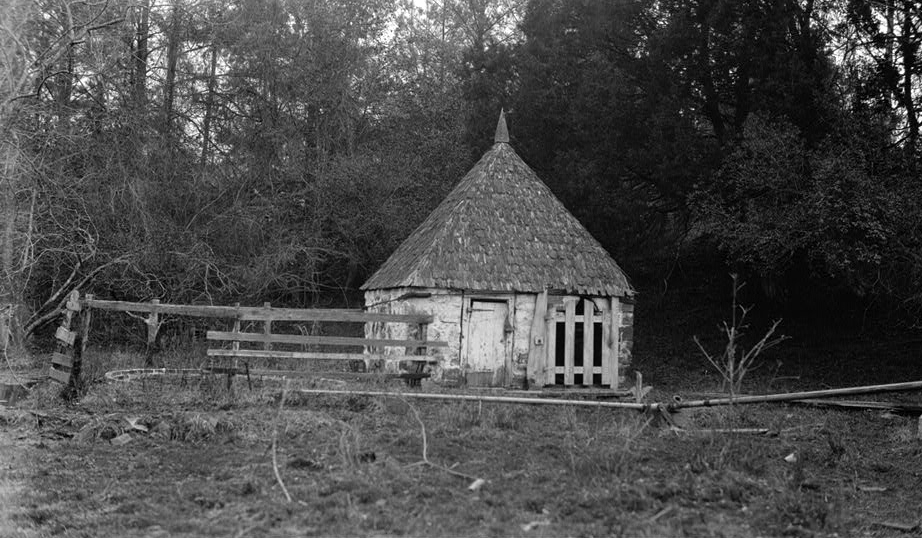
Denbigh Plantation, also known as Mathews Manor, is a historic archaeological site located at Newport News, Virginia. The earliest owner of land in this area is known to be merchant Abraham Peirsey (who first came to Virginia in 1616 aboard the ship Susan), and died on 16 January 1628. The name Denbigh is first recorded in 1635 in a will, but it is very likely the Anglican parish from which it draws its name was established a decade earlier, at the same time as the other parishes in the area. Captain Samuel Mathews acquired the property upon his marriage to Peirsey's widow, Frances Greville. (Frances Greville had arrived in Virginia in 1620 as one of four women aboard the Supply, married Lt Col Nathaniel West (d. 1623/4), then Abraham Piersey (d. 1628), then Samuel Matthews) Greville would die around 1633. Mathews would spend much of his later life in England, eventually remarrying to a daughter of Sir Thomas Hinton. Wealth in Virginia and political power in England would make him a key figure in the early politics of the Virginia colony. The house, to be known as Mathews Manor, was built about 1626, possibly started by Peirsey. The post-medieval half-timbered Mathews Manor included a projecting porch and center chimney, both characteristic of Virginia's earliest substantial dwellings. Mathews's original grand house burned about 1650 and was replaced with a less substantial home nearby by his son, Samuel Mathews Jr. (1630–1660), a popular loyalist-leaning governor of Colonial Virginia (1656–1660) during the commonwealth period. John Mathews, b. 1659 (son of Samuel Mathews Jr, grandson of Capt Mathews) is known to have lived at the home as a child, until sometime after receiving a patent on 9 March 1678 for 2944 acres on Deep Creek about 2 miles south of this location, near Blunt Poynt (Blount Point). It is recorded that on 24 Jun 1679, William Cole was serving as guardian for the young John Mathews. William Cole had purchased nearby Boldrup Plantation in April 1671, and held it through his death in 1694. William Cole's daughter Susannah married Dudley Digges and William's own second wife was Anne Digges, both of children of Edward Digges, cementing the Cole-Digges family of Virginia. In 1680, the Virginia House of Burgesses created a port town at the convergence of the Warwick River and Deep Creek. This was accomplished via the purchase of 50 acres of land from Denbigh Plantation. By 1691, this became an urban center including a courthouse, jail, and several houses. By 1730 it was a small commercial center, including a tobacco inspection warehouse, shipbuilding facilities, and wharf. By 1752, a free school for poor children was present, supported by the county.
Location
Categories
Property data from the National Register of Historic Places, National Park Service (public domain).
Description adapted from Wikipedia under the Creative Commons Attribution-ShareAlike 4.0 International License.
Everything a full report reveals about Denbigh Plantation Site
This page lists Denbigh Plantation Site. A full Aubrey report for an address near it pulls together this listing alongside battlefield records, land patents, and every other historical record within a chosen radius:
Every location is different. Not every section appears for every place, only what the historical record actually holds turns up in a report.
Questions about this property
When was Denbigh Plantation Site listed on the National Register?
Denbigh Plantation Site was listed on the National Register of Historic Places on February 15, 1970.
What type of historic resource is Denbigh Plantation Site?
Denbigh Plantation Site is classified as a site in the National Register of Historic Places.
What is the period of significance for Denbigh Plantation Site?
The period of significance for Denbigh Plantation Site is recorded as the colonial era, specifically around 1616.
Can I research the history near Denbigh Plantation Site?
Yes. Aubrey Research reports search National Register listings, battlefield records, land patents, and other primary historical sources within any radius of a US address. A report for an address near Denbigh Plantation Site will include this listing and all other historical records in the area.
More in Newport News County
Historic places, battles, and census history across Newport News County.
Explore Newport NewsCounty ›More historic places in Virginia
Browse all historic places in Virginia.
View Virginiahistoric sites ›Research the history near this site
An Aubrey US report for an address near Denbigh Plantation Site will include this listing alongside battlefield records and other historical sources within your chosen radius.