About this property
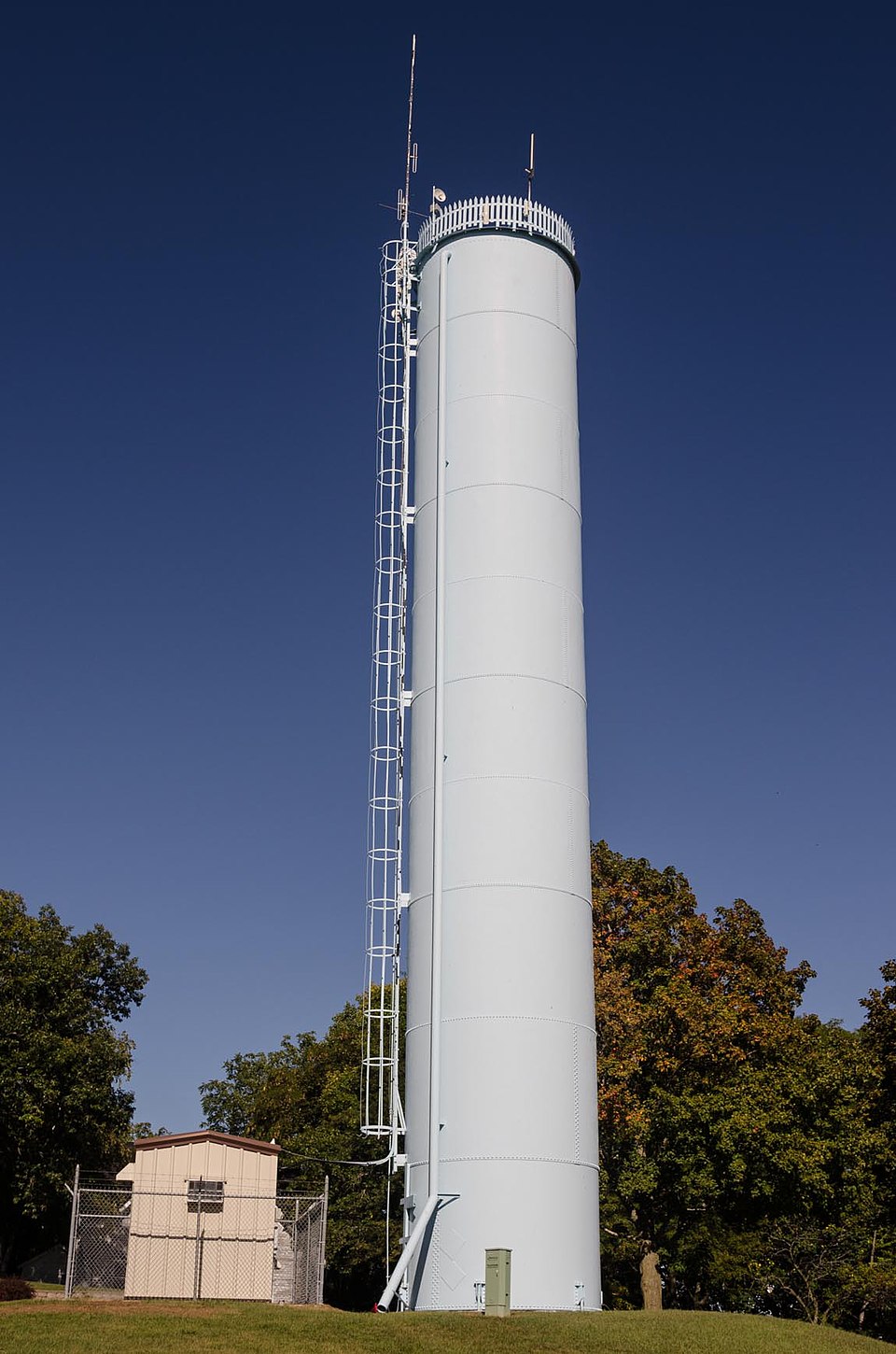
The Evansville Standpipe is a historic water tower located in Evansville, Wisconsin. The 80-ft tall steel tower was built in 1901 by the Chicago Bridge & Iron Company, as part of the development of the local water supply system, spurred on by a devastating fire in 1896 that destroyed a large section of downtown Evansville. It was added to the National Register of Historic Places in 2008. From the time of Evansville's settlement in 1839, water was drawn from hand-dug wells. As the row of wooden stores grew along Main Street, people became concerned about the risk of fire, but there was also a concern about cost and having government provide fire protection services. In 1872 the businessmen built two cisterns at Main and Madison for firefighting. After the Spencer House stable burned in 1877, the village board bought a $250 fire engine and formed a fire company, but a fire in 1878 proved that this engine was too small, and men instead saved the burning building with a bucket brigade. Fires in 1880 and 1882 didn't rouse the village to action, but when a fire in 1884 destroyed the Baker Manufacturing Company's factory and the Lehman Bros. furniture factory, the village agreed to invest $1500 in a fire engine which would draw water from the creek and cisterns. In 1892 the voters rejected a waterworks systems which would have aided fire protection and provided safe drinking water. In 1896 "The Great Fire" of Evansville wiped out a whole block of the business district. After that, the city council finally required that new buildings in the business district must be fireproof masonry. The testing of the new facility attracted a large audience. Firemen hooked up hoses to the hydrants and found them all to be in working order. From the hydrant at the South Madison and Church Street corner [this being the corner where the city hall and firehouse is located], the pressure of the water through the fire hoses sent out a stream that went as high as the Methodist Church steeple. Everyone seemed satisfied with the new system. For the next several months, private homes and businesses installed pipes to hook up to the water works. In March 1902, the voters agreed to buy the water works and electric plant for $51,000. The standpipe (pictured) is a cylinder 80 feet high and 12 feet in diameter, built of curved steel plates from the Chicago Bridge & Iron Company on a poured concrete foundation. It was filled with water from top to bottom, and a standpipe (as opposed to a water tower) worked in Evansville because the hill on which it stood gave it enough pressure to deliver water anywhere in town. A straight steel ladder ascends the west side of the tower. Standpipes were replaced by water towers because they were generally cheaper, and few standpipes were built after 1910.
Location
Categories
Property data from the National Register of Historic Places, National Park Service (public domain).
Description adapted from Wikipedia under the Creative Commons Attribution-ShareAlike 4.0 International License.
Everything a full report reveals about Evansville Standpipe
This page lists Evansville Standpipe. A full Aubrey report for an address near it pulls together this listing alongside battlefield records, land patents, and every other historical record within a chosen radius:
Every location is different. Not every section appears for every place, only what the historical record actually holds turns up in a report.
Questions about this property
When was Evansville Standpipe listed on the National Register?
Evansville Standpipe was listed on the National Register of Historic Places on February 27, 2008.
What type of historic resource is Evansville Standpipe?
Evansville Standpipe is classified as a structure in the National Register of Historic Places.
What is the period of significance for Evansville Standpipe?
The period of significance for Evansville Standpipe is recorded as the industrial era, specifically around 1901.
Can I research the history near Evansville Standpipe?
Yes. Aubrey Research reports search National Register listings, battlefield records, land patents, and other primary historical sources within any radius of a US address. A report for an address near Evansville Standpipe will include this listing and all other historical records in the area.
More in Rock County
Historic places, battles, and census history across Rock County.
Explore RockCounty ›More historic places in Wisconsin
Browse all historic places in Wisconsin.
View Wisconsinhistoric sites ›Wisconsin history
Colonial settlement, territorial period, and statehood narrative.
Wisconsinhistory ›Research the history near this site
An Aubrey US report for an address near Evansville Standpipe will include this listing alongside battlefield records and other historical sources within your chosen radius.