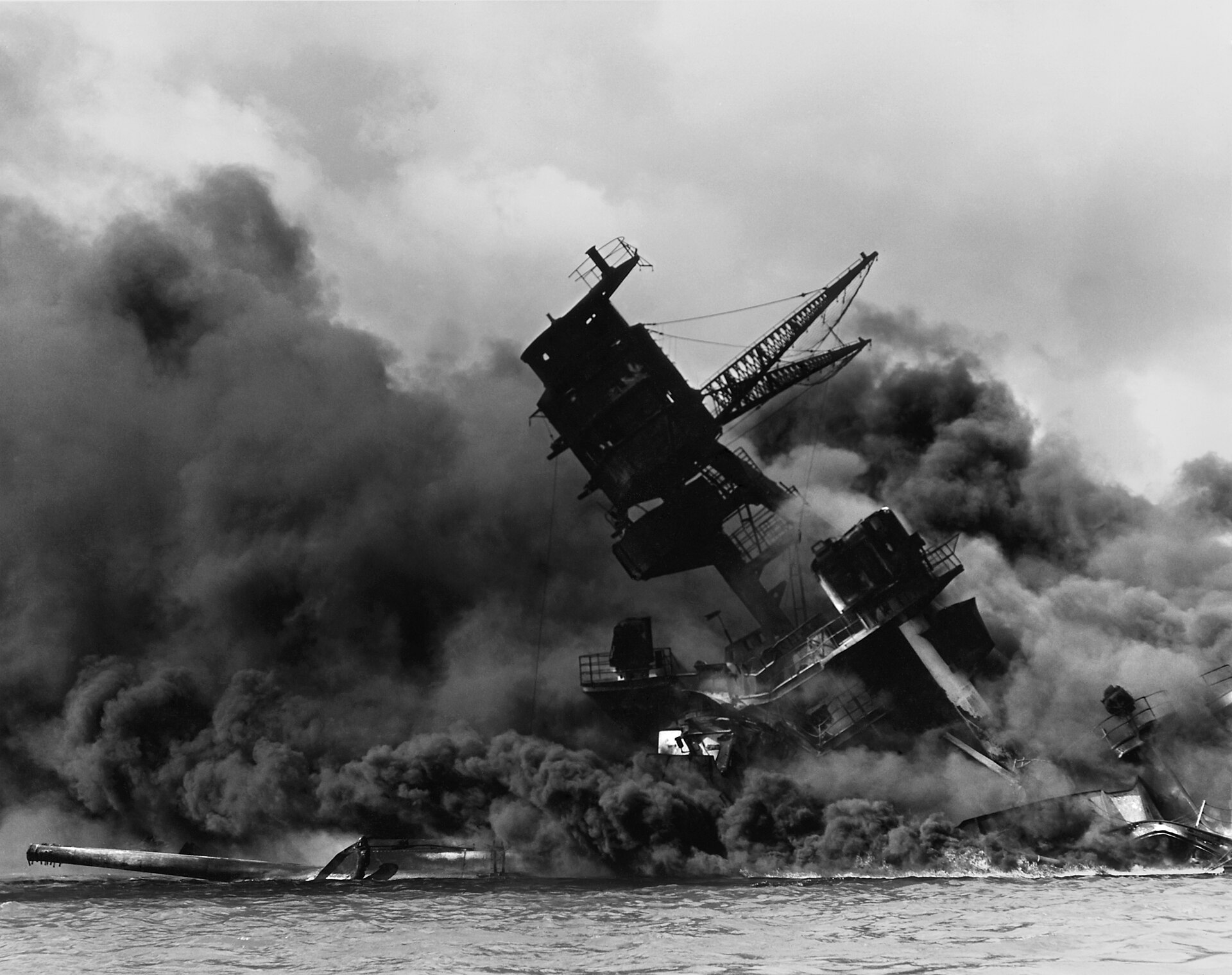
The Modern period on American soil
Between 1898 and 1945 the United States fought two world wars and became a leading military power, yet very little of that fighting reached the American mainland. The armed conflict of the era falls into two very different layers. The first is a thin set of military actions on home ground: cross-border clashes along the Mexican frontier in the 1910s, enemy sabotage and shelling of the coasts, and the only foreign occupation of United States territory, in the Aleutian Islands. The second is domestic and criminal: the sustained wars fought by bootlegging and racketeering organizations during Prohibition and the Depression. Taken together they describe a country largely secure from invasion but convulsed by violence of its own making.
Why the guns turned inward
Geography kept regular warfare off American soil. Two oceans, weak neighbors, and the collapse of European and Japanese offensive reach meant that outside the Mexican borderlands, foreign forces could manage only raids, sabotage, and the remote Aleutian landings. The domestic conflict had no such limits. The Eighteenth Amendment and the Volstead Act banned alcohol from 1920 while leaving demand untouched, handing the supply of beer and liquor to armed criminal syndicates. Rivalry over that illegal market produced organized gunfights in city after city, and the Depression added a wave of roving stick-up gangs. For the American public the machine-gun killings of the beer wars and the outlaw shoot-outs, not any battlefield, became the defining armed struggle of the age.
Written by Aubrey Research from Prohibition in the United States on Wikipedia, cited as a reference and not reproduced.
The conflicts
The period splits into two layers. The military layer covers the rare armed actions fought on American ground: the Mexican border campaign of the 1910s, German sabotage in the Great War, and the Second World War at Pearl Harbor, in the Aleutians and along the Pacific coast. The gang layer covers the Prohibition-era wars between organized bootlegging gangs and the running gun battles of the Depression-era outlaw gangs against federal agents. Each conflict is gathered here with its engagements.
Where the fighting fell
The fighting fell along two very different maps: the military actions on the southern border and the Pacific and Alaskan coasts, and the gang wars in the industrial cities of the Midwest and Northeast. Each state carries its own record of engagements. Select a state to see them.
Notable engagements
| Engagement | State | Year | Forces or losses |
|---|---|---|---|
| Black Tom explosion | NJ | 1916 | Sabotage: at least 7 killed, ~100+ injured; ~$20M in damage |
| St. Valentine's Day Massacre | IL | 1929 | 7 killed |
| Union Station Massacre | MO | 1933 | 4 officers + prisoner Nash killed |
| Battle of Dutch Harbor | AK | 1942 | 43 killed, 50 wounded, 14 aircraft lost; Japan: 10 killed… |
| Bombardment of Fort Stevens | OR | 1942 | No casualties; minor damage (telephone cables) |
| Battle of Nogales | AZ | 1915 | 1 killed (Pvt. Stephen D. Little), 5 wounded |
| Norias Ranch Raid | TX | 1915 | 4 wounded; raiders: several killed |
| Ojo de Agua Raid | TX | 1915 | 4 killed, 8 wounded; raiders: ~7 killed, ~9 wounded |
| Glenn Springs Raid | TX | 1916 | 3 soldiers + 1 civilian killed; raiders: ~1 killed, 1… |
| Raid on San Ygnacio | TX | 1916 | 3-4 killed, ~6 wounded; raiders: several killed and captured |
| Battle of Columbus | NM | 1916 | 8 soldiers + 10 civilians killed; Villistas: at least 67… |
| Kingsland explosion | NJ | 1917 | Sabotage: no deaths reported; plant destroyed (~500,000… |
Plus 67 further documented engagements in the the Modern era record.
Engagements and locations are compiled from published sources: Wikipedia (CC BY-SA 4.0); Chronicling America (Library of Congress historic newspapers) (public domain).