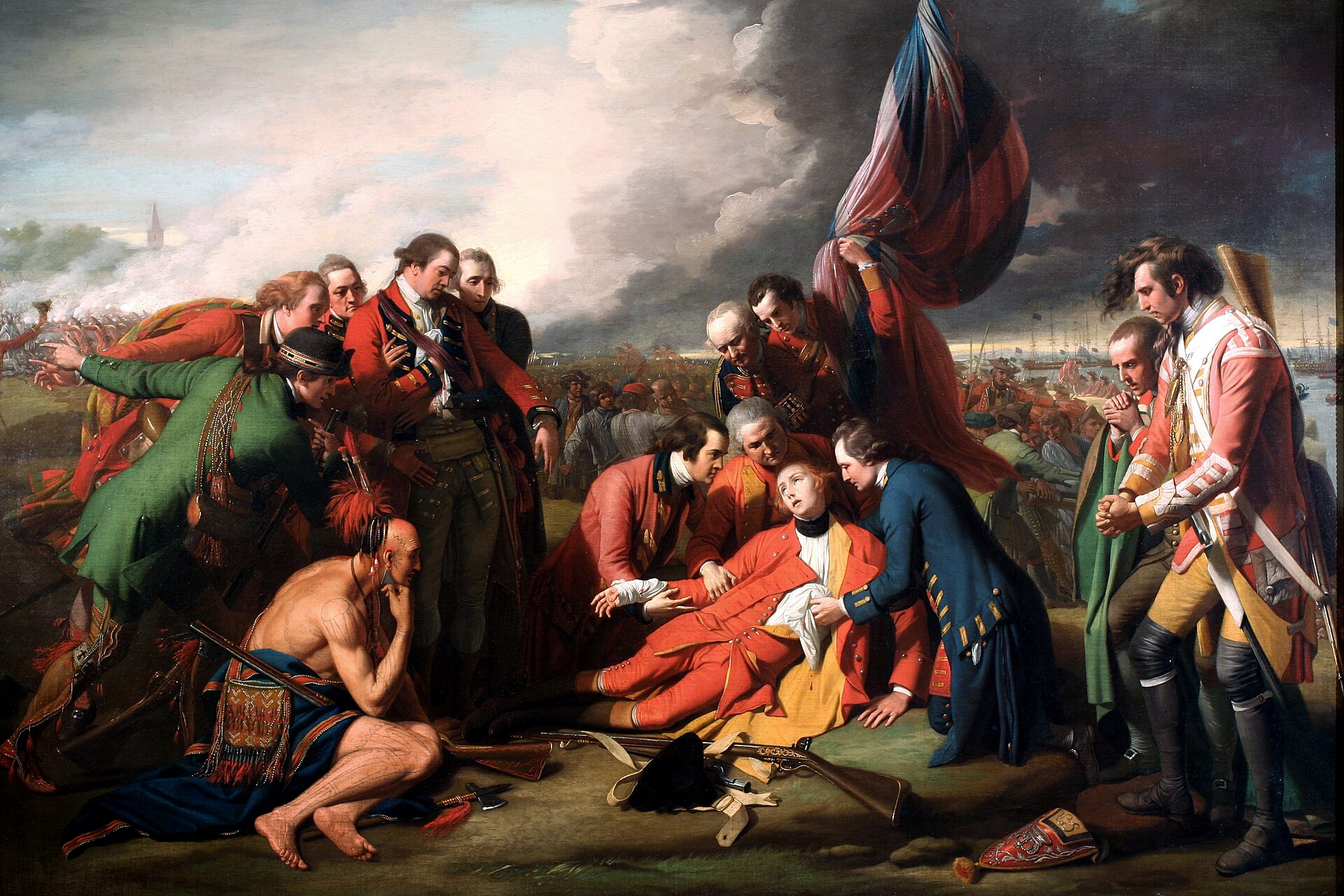
Across more than two centuries of colonization, North America's frontiers were rarely quiet. From the deserts of New Mexico to the tidewater of Virginia, from the coastal woodlands of New England to the river valleys of Louisiana and the Great Lakes, competing powers and peoples fought recurring wars over land, trade, sovereignty, and survival. Spanish colonists faced sustained resistance from Pueblo communities in the arid Southwest and from Native nations along Florida's borders. English settlements in Virginia and New England fought protracted campaigns against the Powhatan confederacy, the Pequot, and the Wampanoag-led coalition of King Philip's War. Farther south, Carolina traders and planters found themselves nearly overwhelmed by a broad alliance of southeastern nations, while French Louisiana faced its own reckoning with the Natchez. Layered atop all of this were four successive wars between Britain and France, fought out in North America as extensions of European dynastic and imperial rivalries, each drawing Indigenous allies into the struggle on both sides.
What unites these otherwise scattered conflicts is not a single storyline of settlers against Native peoples but a shared pattern of contested coexistence breaking down under pressure. Trade relationships soured into resentment, land agreements were violated or reinterpreted, and alliances shifted as new colonial powers arrived or weakened. Native nations were never simply targets of colonial expansion; they were also strategists, diplomats, and combatants who allied with or against various European powers according to their own interests, sometimes joining colonial militias, sometimes forming broad multiethnic coalitions capable of threatening a colony's very existence. Likewise, European rivalries in Europe itself, whether over succession to a throne or control of trade routes, spilled directly into American forests and river valleys, turning local disputes into pieces of much larger global contests.
The consequences of this long era of warfare were profound and lasting. Entire Native nations were scattered, absorbed into others, or driven to seek shelter among more distant peoples, while colonial societies were reshaped by the losses and fears these wars produced. Political boundaries shifted repeatedly, imperial fortunes rose and fell, and by the era's end the map of colonial control across the continent looked nothing like it had at the outset.
Threads of a Continental Struggle
Although the individual wars of this era are often remembered in isolation, they were bound together by common causes and by participants who moved between conflicts. Disputes over land encroachment, the collapse of trust between colonial authorities and Native leaders, and the strains of expanding trade networks recur again and again, whether in Powhatan Virginia, Pequot Connecticut, Wampanoag New England, Natchez Louisiana, or Yamasee Carolina. In each case, alliances that had once kept peace, whether personal bonds between leaders or shared commercial interests, eventually gave way under the weight of repeated grievance, until war seemed the only remaining option to one side or the other.
Native coalitions themselves were rarely simple or singular. Wars such as the one led by the Wampanoag sachem Metacom, the uprising organized by Po'pay among the Pueblo towns, and the broad alliance that rose against Carolina all depended on painstaking diplomacy across language and cultural divides, uniting communities that did not always share a common tongue or history of cooperation. Success or failure often turned on which outside groups joined the fight, whether Mohawk warriors tipping the balance against the Wampanoag coalition, Cherokee support turning the tide against the Yamasee alliance, or Chickasaw shelter sustaining Natchez resistance long after their principal settlements had fallen. European powers, in turn, depended just as heavily on Indigenous alliances, courting them deliberately to offset their own thin numbers, as the French did against their more numerous English rivals.
Running alongside these regional struggles was the recurring rivalry between Britain and France, which repeatedly drew colonial militias, Indigenous allies, and even distant European battlefields into a single interlocking contest for control of the continent. Each successive war in this sequence built upon the unresolved grievances of the last, escalating from contested frontiers into full campaigns to seize entire colonial territories. By the time the last of these Anglo-French wars concluded with the transfer of vast territories between empires, the underlying tensions that had fueled a century of colonial fighting, over land, trade, and sovereignty, remained unresolved. Native nations along the Great Lakes rose again in a final major coalition effort to expel British power from their homelands, showing that even after imperial contests were settled on paper, the deeper struggles that had driven this long era of warfare were far from finished.
Written by Aubrey Research, drawn from the individual colonial-conflict summaries on this site, each of which cites its own sources.
The conflicts
Colonial America was not one war but many. Each conflict hub covers its engagements, where they were fought and their outcomes.
Where the fighting fell
Select a state to see its colonial engagements.
By decade
The tempo of colonial warfare, 1540s to 1760s. Select a decade to see its engagements.
Notable engagements
| Engagement | State | Year | Outcome | Forces or losses |
|---|---|---|---|---|
| Tiguex War | NM | 1540 | Spanish victory | 12 Southern Tiwa Puebloans: Hundreds killed, executed, or… |
| 1599 Acoma massacre | NM | 1599 | Spanish victory | hundreds of Acoma killed and enslaved |
| Wheeler's Surprise (Siege of Brookfield) | MA | 1675 | Inconclusive | 8 killed in ambush |
| Great Swamp Fight | RI | 1675 | New England victory | ~70 colonists killed, ~150 wounded; ~600 Narragansett killed |
| Battle of Bloody Brook | MA | 1675 | Pocumtuc Confederacy victory | 40 militia + 17 teamsters killed |
| Sudbury Fight | MA | 1676 | American victory | ~half of 70-man militia killed |
| Battle of Turner's Falls (Peskeompscut) | MA | 1676 | Colonial victory | ~200 Natives killed; ~40 militia killed |
| Raid on Dover | NH | 1689 | Pennacook victory | Pennacook: Unknown; Residents of Dover: 23 killed, 29… |
| Schenectady massacre | NY | 1690 | French-Indian victory | Kahnawake; Algonquin: None; New York; Mohawk: 60 killed… |
| Raid on Groton | MA | 1694 | French and Indian victory | England; 23px Province of Massachusetts Bay: Killed 20… |
| Raid on Oyster River | NH | 1694 | French and Wabanaki Confederacy victory | 23px Province of New Hampshire: 104 inhabitants were killed… |
| Battle of Flint River | GA | 1702 | English and allied victory | Pro-Bourbon SpainApalachee: most killed or captured… |
Plus 527 further documented engagements in the colonial America record.
Engagements and locations are compiled from published sources: Wikipedia (text rewritten and cited as a reference, CC BY-SA 4.0); Sylvester, Indian Wars of New England (1910) (public domain); Bodge, Soldiers in King Philip's War (1906) (public domain); NPS ABPP survey report (factual data only, cited as a reference).