About this property
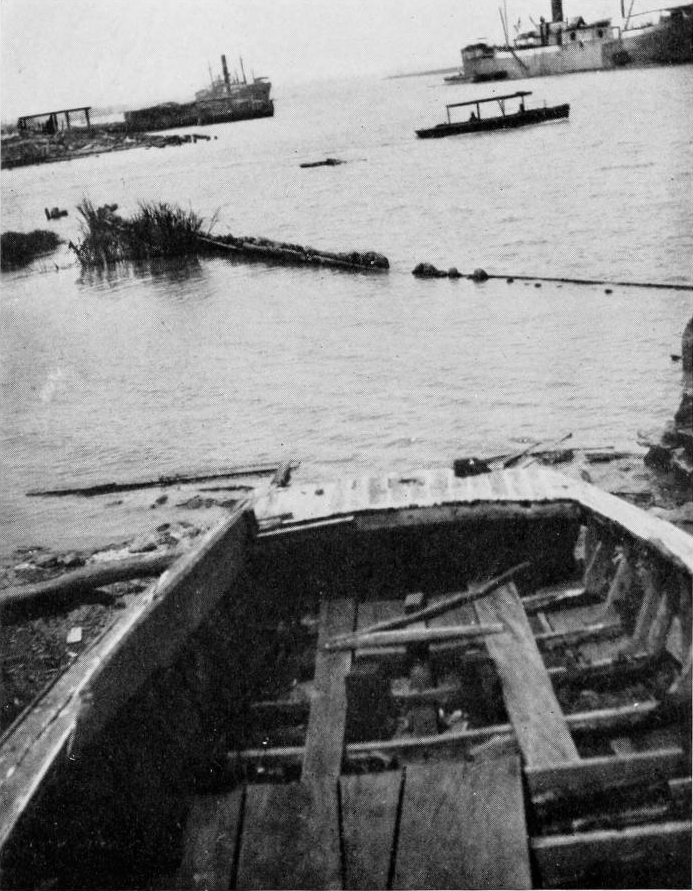
The schooner Clotilda (often misspelled Clotilde) was the last known U.S. slave ship to bring captives from Africa to the United States, arriving at Mobile Bay, in autumn 1859 or on July 9, 1860, with 110 African men, women, and children. The ship was a two-masted schooner, 86 feet (26 m) long with a beam of 23 ft (7.0 m). U.S. involvement in the Atlantic slave trade had been banned by Congress through the Act Prohibiting Importation of Slaves enacted on March 2, 1807 (effective January 1, 1808), but the practice continued illegally. In the case of the Clotilda, the voyage's sponsors were based in the South and planned to buy Africans in Whydah, Dahomey. After the voyage, the ship was burned and scuttled in Mobile Bay in an attempt to destroy the evidence. After the Civil War, Oluale Kossola and 31 other formerly enslaved people founded Africatown on the north side of Mobile, Alabama. They were joined by other continental Africans and formed a community that continued to practice many of their West African traditions and Yoruba language for decades. A spokesman for the community, Cudjo Lewis, lived until 1935 and was one of the last survivors from the Clotilda. Redoshi, another captive on the Clotilda, was sold to a planter in Dallas County, Alabama, where she became known also as Sally Smith. She married, had a daughter, and lived until 1937 in Bogue Chitto. She was long thought to have been the last survivor of the Clotilda. Research published in 2020 indicated that another survivor, Matilda McCrear, lived until 1940. Some 100 descendants of the enslaved people carried by the Clotilda still live in Africatown, and others are around the country. After World War II, the neighborhood was absorbed by the city of Mobile. A memorial bust of Lewis was placed in front of the historic Union Missionary Baptist Church. The Africatown historic district was listed on the National Register of Historic Places in 2012. In May 2019, the Alabama Historical Commission announced that remnants of a ship found along the Mobile River, near 12 Mile Island and just north of the Mobile Bay delta, were confirmed as the Clotilda. The wreck site was listed on the National Register of Historic Places in 2021.
Location
Categories
Property data from the National Register of Historic Places, National Park Service (public domain).
Description adapted from Wikipedia under the Creative Commons Attribution-ShareAlike 4.0 International License.
Everything a full report reveals about CLOTILDA (schooner)
This page lists CLOTILDA (schooner). A full Aubrey report for an address near it pulls together this listing alongside battlefield records, land patents, and every other historical record within a chosen radius:
Every location is different. Not every section appears for every place, only what the historical record actually holds turns up in a report.
Questions about this property
When was CLOTILDA (schooner) listed on the National Register?
CLOTILDA (schooner) was listed on the National Register of Historic Places on November 8, 2021.
What type of historic resource is CLOTILDA (schooner)?
CLOTILDA (schooner) is classified as a site in the National Register of Historic Places.
What is the period of significance for CLOTILDA (schooner)?
The period of significance for CLOTILDA (schooner) is recorded as the early_republic era, specifically around 1855.
Can I research the history near CLOTILDA (schooner)?
Yes. Aubrey Research reports search National Register listings, battlefield records, land patents, and other primary historical sources within any radius of a US address. A report for an address near CLOTILDA (schooner) will include this listing and all other historical records in the area.
More in Baldwin County
Historic places, battles, and census history across Baldwin County.
Explore BaldwinCounty ›Research the history near this site
An Aubrey US report for an address near CLOTILDA (schooner) will include this listing alongside battlefield records and other historical sources within your chosen radius.