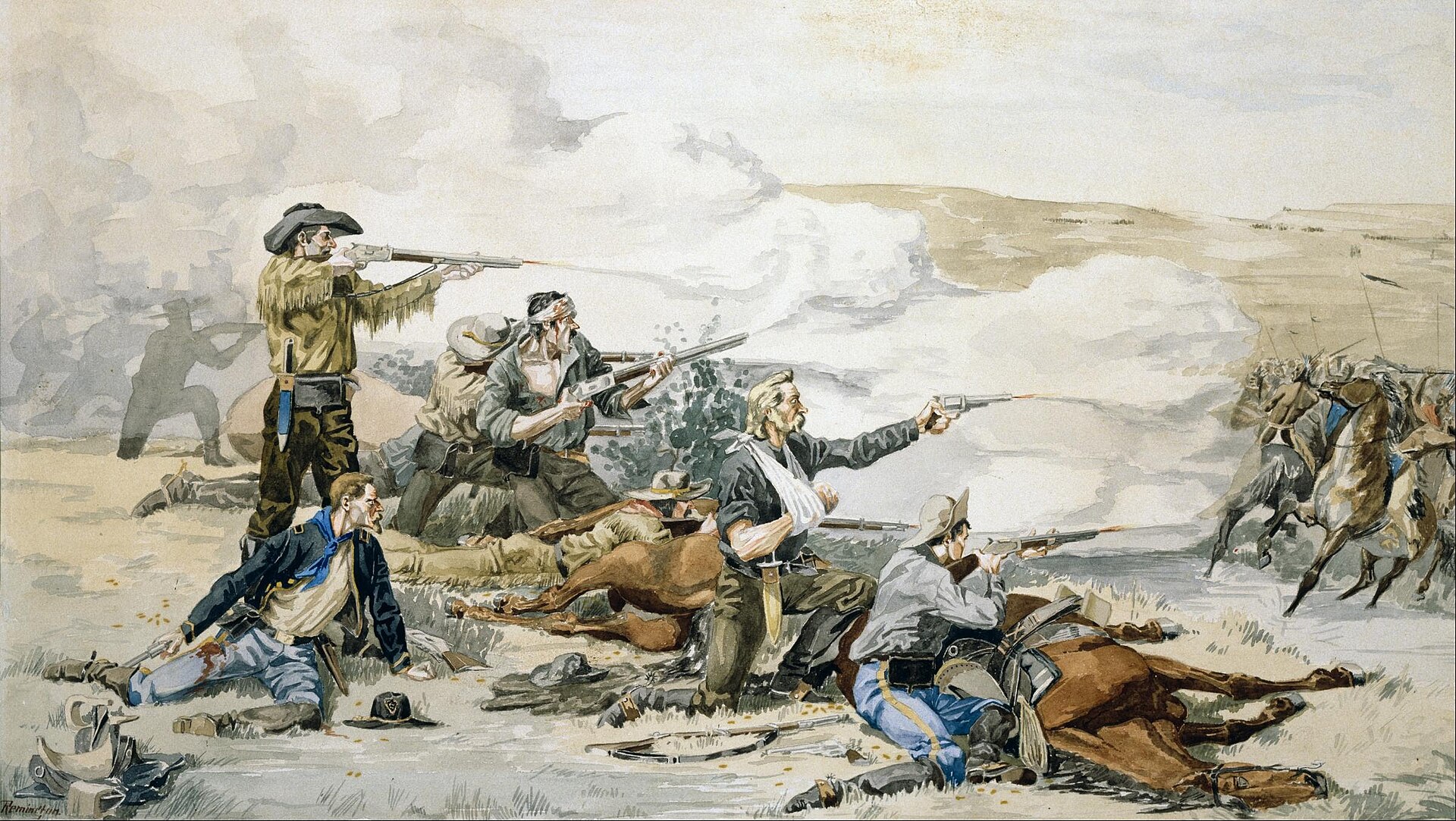
Background
The roots of the conflict trace back to the Walla Walla Council of 1855, where federal officials pressured the Nez Perce into surrendering their homeland and relocating alongside the Walla Walla, Cayuse, and Umatilla peoples to the Umatilla Reservation in Oregon Territory. Opposition to this scheme ran so deep among the affected tribes that Isaac I. Stevens, serving as Washington Territory's governor and superintendent of Indian affairs, along with Joel Palmer, his Oregon counterpart, put their names to a separate agreement that same year. This Nez Perce Treaty allowed the tribe to keep much of their territory across Idaho, Washington, and Oregon, though they ceded roughly 5.5 million of their nearly 13 million acres to the government for a token payment. In return, they retained hunting, fishing, and grazing privileges on unclaimed portions of their former lands, mirroring the access enjoyed by white territorial citizens.
This arrangement created a Nez Perce reservation spanning 7,500,000 acres across the three territories, and its terms barred white settlement without tribal consent. That protection collapsed in 1860 when prospectors struck gold near what is now Pierce, Idaho, drawing roughly 5,000 fortune hunters onto reservation soil and spawning the unauthorized settlement of Lewiston as a trading post. Gold proved scarce in the region, yet the influx of miners drew
Aftermath
All told, roughly 2,000 American troops from various units, along with Indian auxiliaries, took part in the campaign against the Nez Perce. The tribe fought in eighteen separate engagements, among them four major battles and no fewer than four bitterly fought skirmishes. Observers at the time widely commended the Nez Perce for how honorably and effectively they had fought. The New North-West, a Montana paper, remarked that their conduct since crossing into Montana had almost always displayed the finest qualities recognized among civilized nations.
At the time Joseph surrendered, both Howard and Miles gave assurances that his people could return to their Idaho reservation. General Sherman, however, who commanded the Army, rejected that arrangement and ordered the group sent instead to Kansas. Joseph later remarked that he trusted General Miles completely, and would never have laid down arms otherwise.
Miles then led his prisoners on a 265 mile march, roughly 426 kilometers, to the Tongue River Cantonment in southeastern Montana Territory. They reached this post on October 23, 1877, remaining there until the 31st. From this point the able-bodied fighting men were marched onward toward Fort Buford, situated where the Yellowstone meets the Missouri River. Meanwhile, on November 1, the women, children, sick, and wounded departed for the same fort aboard fourteen Mackinaw boats.
Sometime between November 8 and 10, the group left Fort Buford bound for Fort Abraham Lincoln, the post Custer had commanded before his death, located across the Missouri from Bismarck in Dakota Territory. About two hundred people traveled by mackinaw boat starting November 9, guarded by two companies from the First Infantry, while the remaining prisoners rode on horseback under escort from the Seventh Cavalry, heading toward winter quarters.
When the Nez Perce captives arrived in Bismarck, most of the town's residents came out to greet them, laying on a generous spread of food for both the prisoners and their military guard. Then, on November 23, their lodges and belongings were packed into freight cars, and the people themselves boarded eleven passenger coaches for the rail journey to Fort Leavenworth, Kansas.
Despite objections the fort's commander raised directly to Sherman, the Nez Perce ended up confined to low, swampy ground near the river. One writer later depicted the toll this took, describing four hundred wretched, helpless, wasted individuals who endured months in that fever-ridden river bottom.
In January of 1879, Chief Joseph traveled to Washington to appeal for his people's return to Idaho, or failing that, for land within Indian Territory, the region that would later become Oklahoma. He addressed both the President and members of Congress, and his statement later appeared in print in the North American Review. Although he received considerable public admiration, the government ultimately denied his request because of strong resistance from Idaho residents. The Nez Perce were instead relocated to Oklahoma, eventually settling on a modest reservation near the town of Tonkawa. Life in what was called "the hot country" proved scarcely better than the conditions they had endured at Leavenworth.
Finally, in 1885, Joseph along with 268 surviving members of his people received permission to return to the Pacific Northwest. Yet Joseph himself was barred from resettling on the Nez Perce reservation, and was instead placed on the Colville Indian Reservation in Washington, where he remained until his death in 1904.
Written by Aubrey Research from Nez Perce War on Wikipedia, cited as a reference and not reproduced.
Where these engagements were fought
All 6 are placed on the map. Select a marker to see the engagement.
Red markers are surveyed battlefields with a mapped boundary; navy markers are point-located engagements. Select a marker to open its page.
Documented engagements
| Engagement | State | Year | Outcome | Forces or losses |
|---|---|---|---|---|
| Bear Paw Mountains | MT | 1877 | United States decisive victory | 418 Indians captured |
| Battle of Canyon Creek | MT | 1877 | Nez Perce victory | 4 killed; 11 wounded vs 3 killed ; 3 wounded; <! |
| White Bird Canyon | ID | 1877 | Nez Perce victory | 34 killed; 2 wounded |
| Battle of the Clearwater | ID | 1877 | United States victory | 15 dead, 25 wounded soldiers; 2 dead, 1 wounded civilians… |
| Battle of Camas Creek | ID | 1877 | Nez Perce victory | 3 killed; 6 wounded vs Probably only 2 wounded |
| Battle of the Big Hole | MT | 1877 | Inconclusive | 31 killed; 38 wounded vs 70-90 killed of whom perhaps… |
By state
Engagements and locations are compiled from published sources: U.S. Adjutant-General's Office, Chronological List of Actions with Indians (1891) (public domain (U.S. federal record)); Wikidata (structured data, CC0).