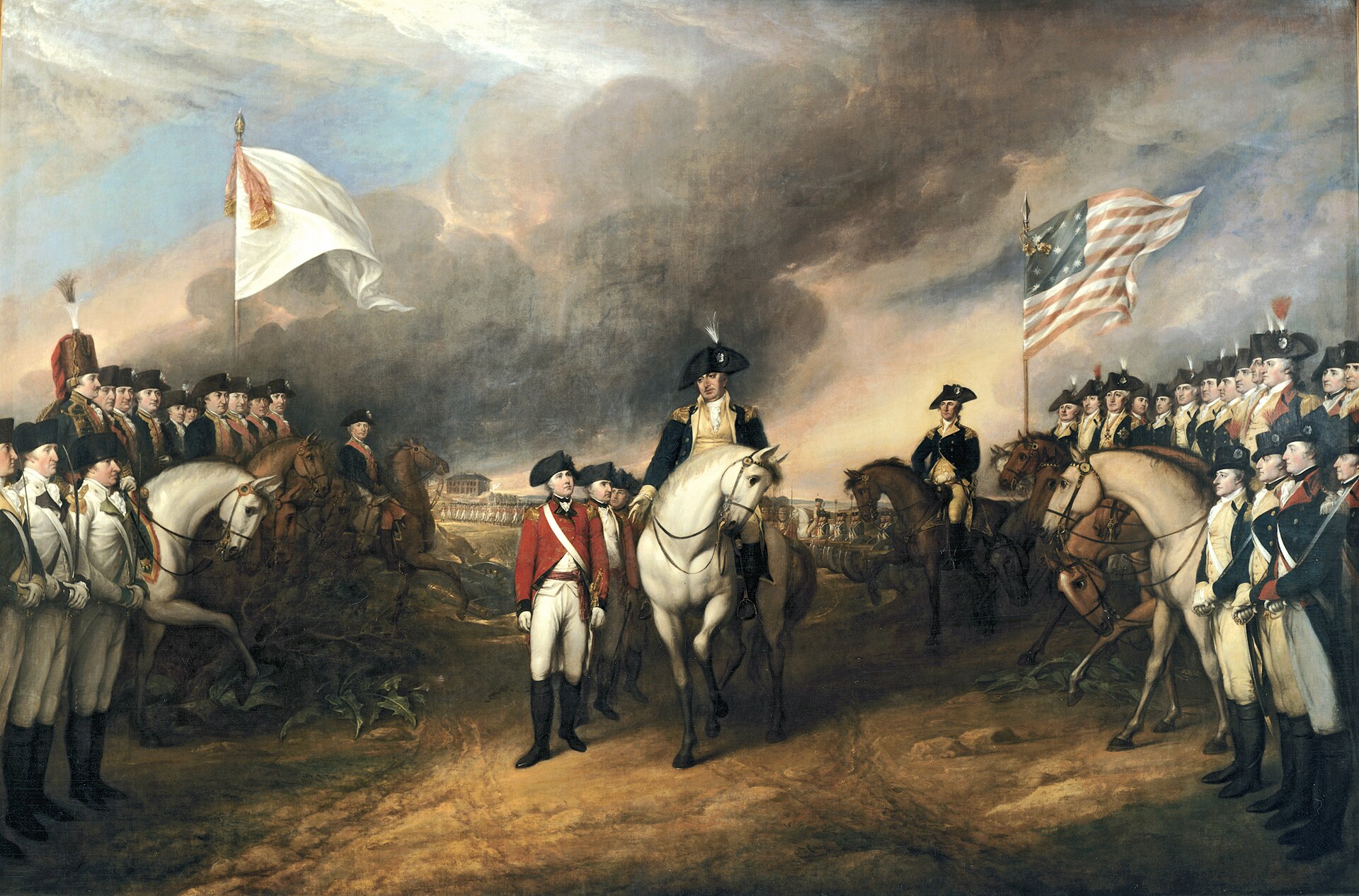
1776 was the year the American Revolutionary War, which had begun the previous spring, turned from a colonial uprising into a declared bid for independence. In March, George Washington's Continental Army forced the British out of Boston after a prolonged siege, an early morale-boosting win for the young rebel force. The British commander William Howe struck back hard, though, launching a campaign that captured New York City that November. Washington answered with a bold winter gamble, slipping across the Delaware River to score narrow but important victories at Trenton and Princeton that kept the fight alive heading into the next year.
The year's defining moment, however, happened in print and in Congress rather than on the battlefield. Thomas Paine's pamphlet "Common Sense," published in January, made a widely read case for American self-rule and helped sway public opinion toward breaking with Britain entirely. That push culminated on July 2, when the Second Continental Congress voted for independence, and two days later, on July 4, unanimously adopted the Declaration of Independence. Written mainly by Thomas Jefferson, with input from a five-person drafting committee that also included John Adams, Benjamin Franklin, Roger Sherman, and Robert Livingston, the declaration cast the colonies as "one people" severing ties with King George III and listed grievances against him. Notably, it was also among the first documents to refer to the colonies as the "United States" rather than the "United Colonies."
This shift transformed the conflict. What had started as a dispute over taxes and trade became something closer to a civil war, pitting Patriots who backed independence against Loyalists who stayed faithful to the Crown, with the population roughly divided among the two camps and a large group of neutrals. Behind the scenes, Congress also recognized that beating Britain would require outside help, and its Committee of Secret Correspondence worked through 1776 to build alliances and gather intelligence in Europe, laying groundwork for the foreign support, especially from France, that would prove decisive in the years ahead.
Written by Aubrey Research from American Revolutionary War on Wikipedia, cited as a reference and not reproduced.
Where these engagements were fought
Select a marker to see the engagement and open its page.
Engagements of 1776.
Notable engagements of 1776
| Engagement | Year | State | Outcome | Forces or losses |
|---|---|---|---|---|
| Long Island | 1776 | NY | British victory | United States: 300 killed ; 800 wounded ; 1,079 captured or |
| Trenton | 1776 | NJ | American victory | United States: 2 dead from exposure ; 5 wounded; Hesse-Kasse |
| Fort Washington | 1776 | NY | British victory | Hesse-Kassel ; Waldeck and Pyrmont: 84 killed ; 374 wounded; |
| Valcour Island | 1776 | NY | British victory | Great Britain: 40 killed or wounded; 1 gunboat destroyed; Un |
| Kip's Bay (New York City) | 1776 | NY | British victory | Hesse-Cassel: 12 killed and wounded; United States: 50 kille |
| Harlem Heights | 1776 | NY | American victory | 30 killed; 100 wounded; 14 killed ; 157 wounded |
| Pell'S Point | 1776 | NY | British victory | 8 killed; 13 wounded; Hesse-Kassel: 3 British killed; 20 Bri |
| Moores Creek | 1776 | NC | Surveyed battlefield | North Carolina: 1 killed; 1 wounded; 50 killed or wounded; 8 |
| Battle of Lindley's Fort | 1776 | SC | Patriot victory victory | |casualties2 =2 killed, 13 captured / 2 killed, 13 captured |
| Ambush of Geary | 1776 | NJ | American victory | 16th (Queen's) Light Dragoons: One killed; Local Patriot mil |
| Battle of Turtle Gut Inlet | 1776 | NJ | American victory | Estimated 12-36; United Colonies: Nancy destroyed; Richard W |
| White Plains | 1776 | NY | British victory | 4,000-7,500 men | United States: 3,100 men |
Plus 19 further documented engagements in the 1776 record.
Battlefield locations and boundaries are compiled from public records, including the National Park Service American Battlefield Protection Program (public domain) and the American Revolution GIS work of Charles E. Frye (CC BY-SA 4.0).