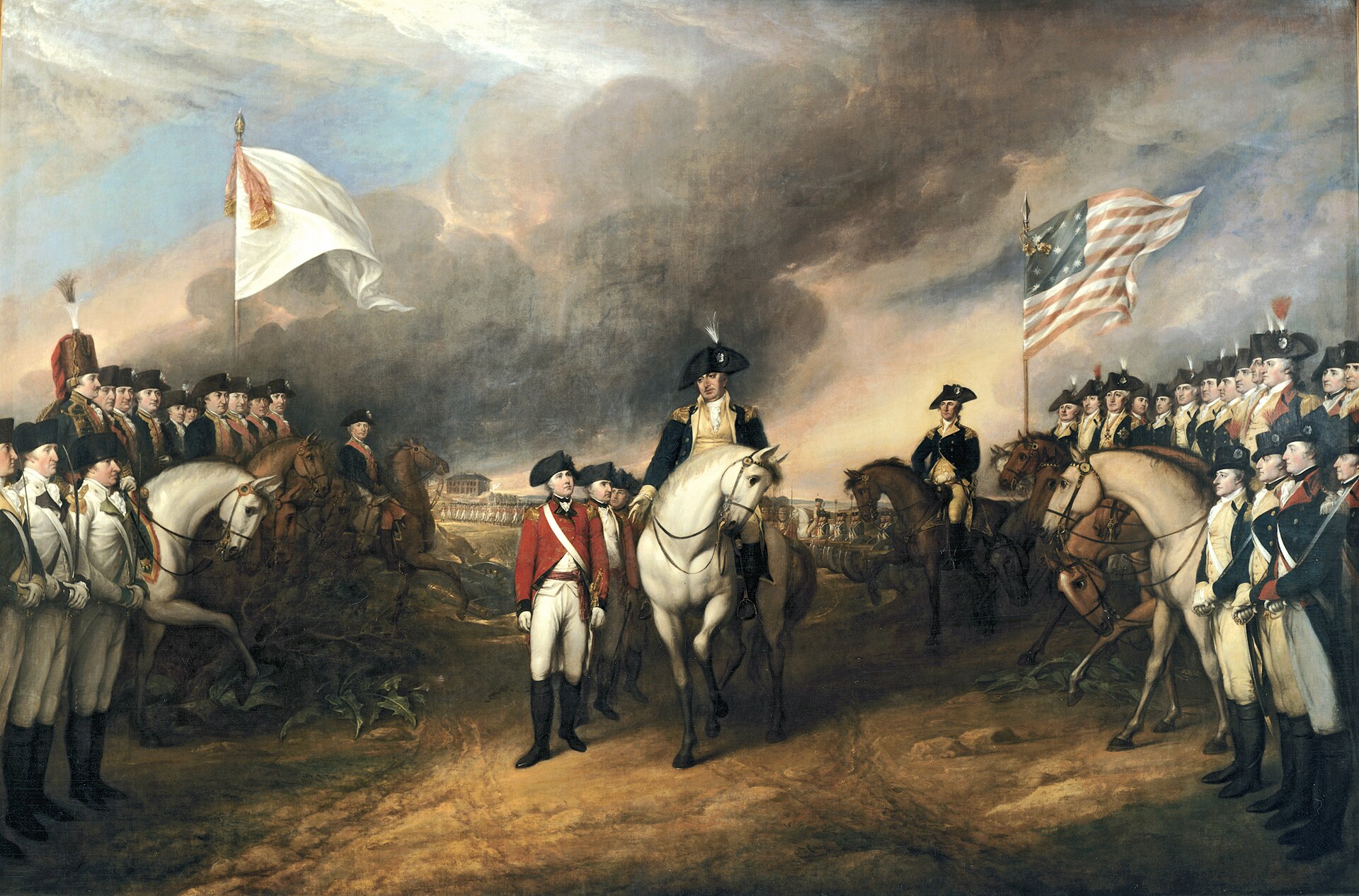
In 1778 the American Revolutionary War expanded from a colonial rebellion into an international conflict, as France formally entered on the side of the United States. The turning point came on February 6, when French and American representatives signed two agreements in Paris: the Treaty of Amity and Commerce, which set trade terms between the two nations, and the Treaty of Alliance, a defensive military pact aimed squarely at Britain. This alliance grew directly out of the American victory at Saratoga the previous October, which persuaded French foreign minister Vergennes that Britain might otherwise patch things up with its rebellious colonies, a outcome he saw as disastrous for French interests.
France's involvement was less an act of idealism than calculated strategy. Vergennes still smarted from the humiliating peace of 1763 and saw the American war as a chance to cut Britain down. Even before the formal alliance, he had quietly let American ships load cargo in French harbors and arranged for Louis XVI to secretly bankroll a front company supplying munitions to the Patriots through Dutch ships and the Caribbean port of Sint Eustatius. Silas Deane had been dispatched to Paris to negotiate on America's behalf, with Vergennes hoping to supplant Britain as America's chief trading and military partner while also protecting French Caribbean colonies, whose sugar and coffee trade was worth more than all American exports put together.
On the American side, support for the French alliance was far from unanimous. Many in Congress worried about swapping British domination for French influence, and more than a fifth of Congressmen voted against the treaty even after a string of battlefield setbacks made outside help seem necessary. Once secured, though, the promise of French backing gave Congress the confidence to reject Britain's Carlisle Peace Commission later that year and hold out for nothing less than full independence. Meanwhile the war ground on elsewhere. American forces also began a scorched earth campaign the following year against pro-British factions of the Haudenosaunee Confederacy, and Spain, though not formally allied with the Americans, joined France against Britain in 1779. The events of 1778, however, marked the moment the American struggle stopped being a purely internal British affair and became a wider contest drawing in the great powers of Europe.
Written by Aubrey Research from American Revolutionary War on Wikipedia, cited as a reference and not reproduced.
Where these engagements were fought
Select a marker to see the engagement and open its page.
Engagements of 1778.
Notable engagements of 1778
| Engagement | Year | State | Outcome | Forces or losses |
|---|---|---|---|---|
| Barren Hill | 1778 | PA | British victory | Oneida: 3 killed; Hesse-Kassel: 9-30 |
| Fort Tonyn And Alligator Creek Bridge | 1778 | FL | British victory | United States: 9 killed; Unknown wounded; Unknown captured; |
| Wyoming Valley | 1778 | PA | Surveyed battlefield | Haudenosaunee: 3 killed; 8 wounded; 302 killed; 5 captured |
| Affair at Little Egg Harbor | 1778 | NJ | British victory | 45 killed; 5 captured; 3 killed; 3 wounded |
| Battle of Quinton's Bridge | 1778 | NJ | British victory | 30-40 killed, wounded and missing; 1 wounded |
| Capture of Savannah | 1778 | GA | British victory | Great Britain: 7 killed; 17 wounded; United States: 83 kille |
| Battle of Crooked Billet | 1778 | PA | British victory | Pennsylvania militia: 26 killed ; 8 wounded ; 58 captured; 7 |
| Siege of Boonesborough | 1778 | KY | American victory | United States: 2 killed ; 4 wounded; Shawnee ; Great Britain |
| Cherry Valley | 1778 | NY | Surveyed battlefield | 14 killed; 11 captured; Haudenosaunee; ; Seneca; Mohawk; Cay |
| Battle of Edgar's Lane | 1778 | NY | Continental victory | Hessians: 23 |
| Frederica naval action | 1778 | GA | n/a | None; 2 sloops captured; 1 brig captured |
| Battle of Chestnut Neck | 1778 | NJ | n/a | Unknown; 1 wounded |
Plus 12 further documented engagements in the 1778 record.
Battlefield locations and boundaries are compiled from public records, including the National Park Service American Battlefield Protection Program (public domain) and the American Revolution GIS work of Charles E. Frye (CC BY-SA 4.0).