By 1782 the American Revolutionary War, which had begun years earlier along the Atlantic seaboard, had spread into a sprawling frontier conflict, and its final chapters were being written far from Yorktown. Word that Britain and the United States had reached a treaty did not reach the western settlements until late in the year, and until then fighting between American frontiersmen and Native American nations allied with Britain continued at a brutal pace. The most important events of the year were the Gnadenhutten massacre and the Crawford expedition, both marked by large-scale retaliatory violence, along with the Battle of Blue Licks in Kentucky, one of the last major engagements of the entire war. By the time news of peace arrived, roughly 7 percent of Kentucky's settlers had died fighting Native Americans, a staggering toll compared to about 1 percent losses across the Thirteen Colonies as a whole, and bitterness on both sides meant the killing did not stop just because the war had officially ended.
This frontier struggle had deep roots. Spain's Governor Bernardo de Gálvez had aided the Americans from the war's early days by letting supplies flow through New Orleans to Pittsburgh, skirting the British naval blockade, and later led offensives that cleared British forts along the Gulf Coast and Mississippi River, weakening Britain's ability to arm its Indian allies. Meanwhile, Virginia's George Rogers Clark had fought to secure the Illinois Country and the Northwest Territory, capturing Kaskaskia and Vincennes and capturing Governor Henry Hamilton, gains later confirmed in the peace treaty. Yet even as these campaigns shifted the balance in the west, raids and reprisals kept the Ohio Valley in turmoil, and 1782's violence showed how far the war's true ending lagged behind the diplomacy playing out overseas.
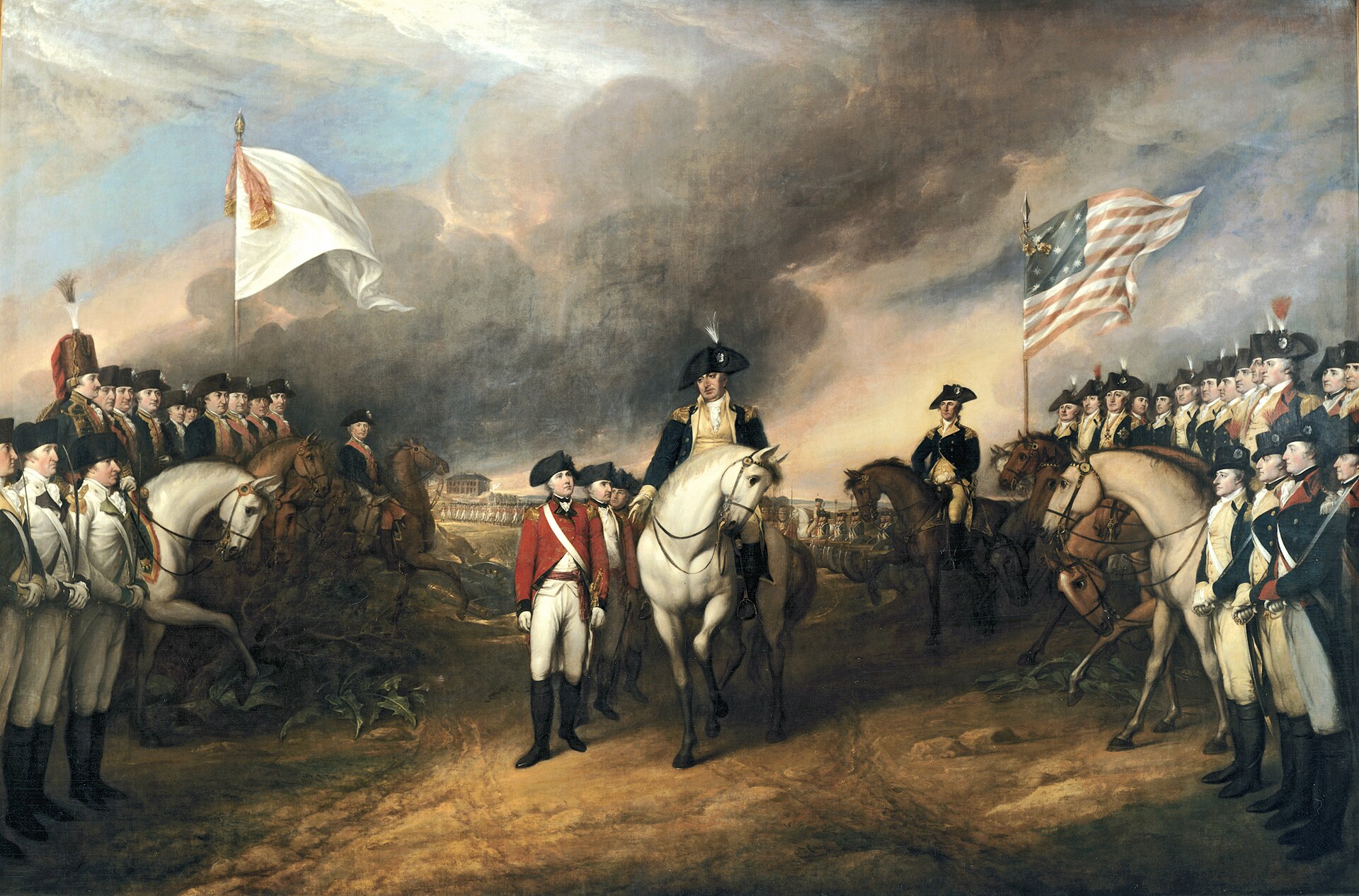
In the east, the conflict's decisive blow had already fallen the previous autumn at Yorktown, where Cornwallis's surrender to Washington and Rochambeau, aided by de Grasse's naval victory over Graves at the Battle of the Chesapeake, effectively sealed Britain's defeat. That collapse, born of confusion between Clinton and Cornwallis over strategy in Virginia, set the stage for the peace negotiations that finally reached the frontier in 1782, closing out a war whose last battles were fought not between armies in the east but between settlers and Native Americans on the western edge of the new nation.
Written by Aubrey Research from American Revolutionary War on Wikipedia, cited as a reference and not reproduced.
Where these engagements were fought
Select a marker to see the engagement and open its page.
Engagements of 1782.
Notable engagements of 1782
| Engagement | Year | State | Outcome | Forces or losses |
|---|---|---|---|---|
| Little Mountain | 1782 | KY | Wyandot victory | British: 17 killed, 2 wounded; American: 7 killed, 6 wounded |
| Battle of Cedar Bridge | 1782 | NJ | Patriot victory victory | 1 killed4 woundedSeveral captured / 1 killed4 wounded |
| Battle of the Combahee River | 1782 | SC | British victory | United States: 2 killed; 19 wounded; Unknown |
| The Toms River Blockhouse Fight | 1782 | NJ | British victory | American: 9 killed, 0 wounded |
Plus 5 further documented engagements in the 1782 record.
Battlefield locations and boundaries are compiled from public records, including the National Park Service American Battlefield Protection Program (public domain) and the American Revolution GIS work of Charles E. Frye (CC BY-SA 4.0).