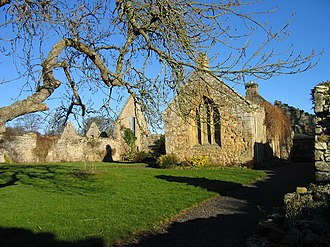
BattlefieldsBattle of Alnwick (1174)
Medieval

Battle of Alnwick (1174)

1174
England
Era
Medieval
Battle Type
Pitched Battle
Location
England
Status
Unregistered
The Combatants

Who Fought

Combatant
Kingdom of England
Strength
~400
VS
Combatant
Kingdom of Scotland
Strength
~60
Outcome
English victory. ; Capture of William the Lion, leads to Treaty of Falaise.
The Battle

History & Significance

The Battle of Alnwick (1174) is one of two battles fought near the town of Alnwick, in Northumberland, England. In the battle, which took place on 13 July 1174, William I of Scotland, also known as William the Lion, was captured by a small English force led by Ranulf de Glanvill.

William had inherited the title of Earl of Northumbria in 1152. However, he had to give up this title to King Henry II of England in 1157. He spent much of his reign trying to regain his lost territory.

In 1173, whilst Henry II was occupied in fighting against his sons in the Revolt of 1173–1174, William saw his opportunity and invaded Northumbria. He advanced on Newcastle but found the partly built stone castle too strong to allow him to take the town. He also attacked Prudhoe Castle but found the defences too strong. Unwilling to undertake a lengthy siege, William returned to Scotland.

In 1174, William again invaded Northumbria with an even larger army that included a contingent of Flemish mercenaries. The army was said to have numbered eighty thousand men, but this is almost certainly an exaggeration. This time he avoided Newcastle but attacked Prudhoe Castle again. The castle had been strengthened since the previous year and after a siege of three days William moved north to besiege Alnwick. William divided his army into three columns and one of these, under the command of Duncan, Earl of Fife, attacked Warkworth and set fire to the church of St Lawrence with a large number of refugees inside.

William made the fatal error of allowing his army to spread out, instead of concentrating them around his base at Alnwick. On the night of 11 July, a party of about four hundred mounted knights, led by Ranulf de Glanvill, set out from Newcastle and headed towards Alnwick. This small fighting force contained several seasoned knights, who had fought against the Scots before. They reached Alnwick shortly after dawn after becoming lost in heavy fog. There they found William’s encampment, where the Scottish king was only protected by a bodyguard of perhaps sixty fighting men. At the sound of alarm, William rushed from his tent and hurriedly prepared to fight. The English force charged and the Scottish king and his bodyguard met the charge head on. The fighting did not last long. William’s horse was killed beneath him and he was captured. Those of his followers who had not been killed surrendered.

William was brought back to Newcastle as a captive. His army found itself leaderless and wandered back to Scotland. William was held at Newcastle for a time but it was not considered strong enough, and he was finally moved to Falaise in Normandy. Whilst he was there, Henry sent an army to occupy part of Scotland, with its five strongest castles: Roxburgh, Berwick, Jedburgh, Edinburgh, and Stirling.

The ground

The ground they fought on

The site of Battle of Alnwick (1174) lies on Yoredale Group, bedrock that formed in the Bashkirian. The rock here is limestone, argillaceous rocks and subordinate sandstone, interbedded.

Casualties & Losses
  • Kingdom of Scotland: All bodyguards either killed or captured
Questions & Answers

Frequently Asked Questions

Unlimited access

Everything a full report reveals about Battle of Alnwick (1174)

This page covers Battle of Alnwick (1174). A full Aubrey report for the area pulls together this battle alongside scheduled monuments and everything else the record holds within a few miles:

Overview
An interactive map of the location with every monument and battle plotted, and a plain-language history built only from what the record holds.
Monuments
The legally protected scheduled monuments around the location, each with its period, type and significance.
Battlefields
The battles and sieges fought on this ground, mapped and set on a timeline of the wider conflict.
Roman Britain
The Roman roads, forts and towns near here, and the Iron Age people who held the land before Rome arrived.
Domesday
The settlement's entry in the 1086 Domesday Book: who held it, what it was worth, and the people who worked the land.
Civil War
The Civil War fighting, garrisons and recorded militaria in this area, woven into the arc of 1642 to 1651.
Geology
The bedrock beneath the site, its age and rock type, reaching back hundreds of millions of years.
LiDAR
Laser-scanned terrain that reveals earthworks hidden under fields and woodland, with likely features flagged.
Local Names
What the street and field names around here actually mean, and the history buried inside them.
Historical Maps
Ordnance Survey maps from the 1800s, layered over the location as it stands today.
Literature
The books, county histories, charters and archives that mention this place, quoted with their sources.
Legal
The protected sites nearby and the metal-detecting, access and treasure laws that apply to this ground.
Spotlight
A deep dive into the most remarkable, lesser-known history of the place, traced back to the record.
Target Zones
For detectorists: the most promising ground to search nearby, ranked by confidence, with what to expect.
Timeline
The whole story of the location told era by era, from prehistory to the present day.
First month just £4.99, then £9.99 a month. Unlimited locations, cancel anytime.

Every location is different. Not every section appears for every place, only what the historical record actually holds turns up in a report.

Start your Battle of Alnwick (1174) report
Or see a real report first
Protected heritage nearby

Scheduled Monuments near Battle of Alnwick (1174)

Alnwick Abbey
Alnwick Abbey
Scheduled monument · ~0.2 mi

Alnwick Abbey is a Premonstratensian monastery founded in 1147 by Eustace FitzJohn in Northumberland, situated in the valley of the River Aln near the market town of Alnwick. The abbey followed the rule of the Premonstratensian order, which combined monastic and canonical traditions, and became o…

Les Hull / CC BY-SA 2.0 / Wikimedia Commons
St Mary's Chantry House
Scheduled monument · ~0.3 mi

St Mary's Chantry House is a late medieval structure located in Northumberland, England. The building dates from the fifteenth or sixteenth century and served as a chantry establishment, functioning as a residence and chapel where priests would say masses for the souls of the dead, a common pract…

Mick Knapton / CC BY-SA 4.0 / Wikimedia Commons
Lion Bridge
Lion Bridge
Scheduled monument · ~0.4 mi

Lion Bridge is a Grade II* listed stone bridge crossing the River Tyne near Corbridge in Northumberland, constructed in the eighteenth century as part of the regional transport network. The bridge is distinguished by its decorative stone lions positioned at each end, which serve as distinctive ar…

Tim Felce (Airwolfhound) / CC BY-SA 2.0 / Wikimedia Commons
Bondgate Tower
Bondgate Tower
Scheduled monument · ~0.6 mi

Bondgate Tower is a fourteenth-century fortified gatehouse forming part of the medieval defences of Alnwick. The structure comprises a substantial stone tower which originally served as a controlled entrance point to the town, reflecting the defensive requirements of the Anglo-Scottish border reg…

Mariegriffiths at English Wikipedia / CC BY-SA 3.0 / Wikimedia Commons
St Leonard's Hospital, Alnwick
Scheduled monument · ~0.7 mi

St Leonard's Hospital, Alnwick is a medieval charitable institution located in Northumberland. Founded in the 12th century, the hospital served as an almshouse providing care and shelter for the poor and infirm. The surviving remains include fragments of stone walls and foundations that reflect t…

Russel Wills / CC BY-SA 2.0 / Wikimedia Commons
Hulne Priory
Hulne Priory
Scheduled monument · ~1.6 mi

Hulne Priory is a Carmelite friary situated in the Hulne Park estate near Alnwick in Northumberland. Founded in the fourteenth century, it represents one of the most northerly establishments of the Carmelite order in medieval England. The surviving remains include substantial stone walls and arch…

Les Hull / CC BY-SA 2.0 / Wikimedia Commons
Camp on Alnwick Moor
Scheduled monument · ~2.2 miles
Defended settlement, 620m SSW of West Brizlee
Scheduled monument · ~2.4 miles
Aubrey Research

Explore the landscape around this battlefield

Aubrey generates in-depth historical research for any location in the UK — drawing on Domesday records, scheduled monuments, Victorian OS maps, geological data and archaeological archives to tell the full story of a place.

Research a location near this battlefieldView a sample report
Sources