William the Lion Siege of Alnwick 1173
Who Fought
English: approximately 400 mounted knights under Ranulf de Glanvill; Scottish: William the Lion with a bodyguard of approximately 60 men at the encampment,; supported by a larger dispersed army including Flemish mercenaries
History & Significance
The Revolt of 1173–1174, sometimes referred to as the Great Revolt, was a rebellion against King Henry II of England led by three of his sons, his wife Eleanor of Aquitaine, and their supporters. The revolt lasted eighteen months and ended in failure; Henry's opponents were forced to submit and were ultimately reconciled with him.
King Henry II had been ruling England, Normandy, and Anjou since 1154, while his wife Queen Eleanor ruled the vast territory of Aquitaine since 1137. In 1173 Henry had four legitimate sons (from oldest to youngest): Henry, called the "Young King", Richard (later called "the Lionheart"), Geoffrey, and John ("Lackland"), all of whom stood to inherit some or all of these possessions. Henry also had an illegitimate son, Geoffrey, born probably before the eldest of the legitimate children.
By this time, Henry the Young King was 18 years old and praised for his good looks and charm. He had recently married to Margaret of France who was the daughter of Louis VII of France, the former husband of Eleanor (Henry the Young King's mother). Henry the Young King kept a large and glamorous retinue but was constrained by his lack of resources: "he had many knights but he had no means to give rewards and gifts to the knights". The young Henry was therefore anxious to take control of some of his ancestral inheritances to rule in his own right.
A contributing factor was Henry II's decision to bequeath three castles in the province of Anjou, which were within the realm of the Young King's inheritance, to his youngest son, John, as part of the agreement for John's betrothal to Alice, the daughter of Humbert III, Count of Savoy.
In February 1173, Henry the Young King met with his father to ask for control of either the Kingdom of England or the Duchy of Normandy. Louis VII had earlier suggested that Henry make such a request, seeing it as an opportunity to pit England's ruler and heir apparent against each other. At this, Henry the Young King was encouraged to rebel by many aristocrats who saw potential profit and gain in a power transition. His mother Eleanor had been feuding with her husband. She joined the cause as did many others upset by Henry's possible involvement in the murder of Archbishop Thomas Becket in 1170, which had left Henry alienated throughout Christendom. The historian Michael Staunton described the revolt as "the greatest crisis of [Henry II's] career to date, more serious in its direct threat to his position than the murder of Thomas Becket". Eleanor's marriage to Henry was not one of much love, as Henry had engaged in extramarital affairs throughout their marriage. These affairs likely had Eleanor already on uneasy terms with Henry, with the killing of Becket being the last straw. According to historian Lindy Grant, "Henry had never been a faithful husband". While Eleanor's involvement was certainly hastened by the state of her marriage and the killing of Thomas Becket, there also was a political aspect of her decision to rise up against Henry. Eleanor had been duchess of Aquitaine for quite some time by the time of the revolt and had become more and more displeased with Henry's increasing overreach onto her lands. It was the culmination of these aforementioned grievances that led Eleanor, sensing an opportunity to get back at Henry through her son's rebellion, to finally rise up against her husband.
The ground they fought on
The site of William the Lion Siege of Alnwick 1173 lies on Yoredale Group, bedrock that formed in the Bashkirian. The rock here is limestone, argillaceous rocks and subordinate sandstone, interbedded.
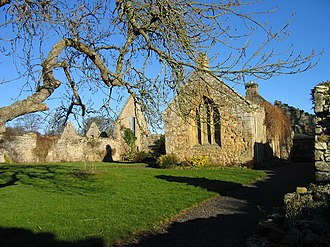
On the morning of 13 July 1174, Ranulf de Glanvill's party of around four hundred mounted knights emerged from a heavy fog to find William the Lion protected by a bodyguard of perhaps sixty men; the Scottish king rushed from his tent, hurriedly prepared to fight, and charged to meet the English force head on, only for his horse to be killed beneath him, leaving him captured and his cause in ruins.
Frequently Asked Questions
Everything a full report reveals about William the Lion Siege of Alnwick 1173
This page covers William the Lion Siege of Alnwick 1173. A full Aubrey report for the area pulls together this battle alongside scheduled monuments and everything else the record holds within a few miles:
Every location is different. Not every section appears for every place, only what the historical record actually holds turns up in a report.
Scheduled Monuments near William the Lion Siege of Alnwick 1173


Battles near William the Lion Siege of Alnwick 1173
Explore the landscape around Northumberland
Aubrey generates in-depth historical research for any location in the UK — drawing on Domesday records, scheduled monuments, Victorian OS maps, geological data and archaeological archives to tell the full story of a place.
- Revolt of 1173–1174 · Wikipedia
- Battle of Alnwick (1174) · Wikipedia