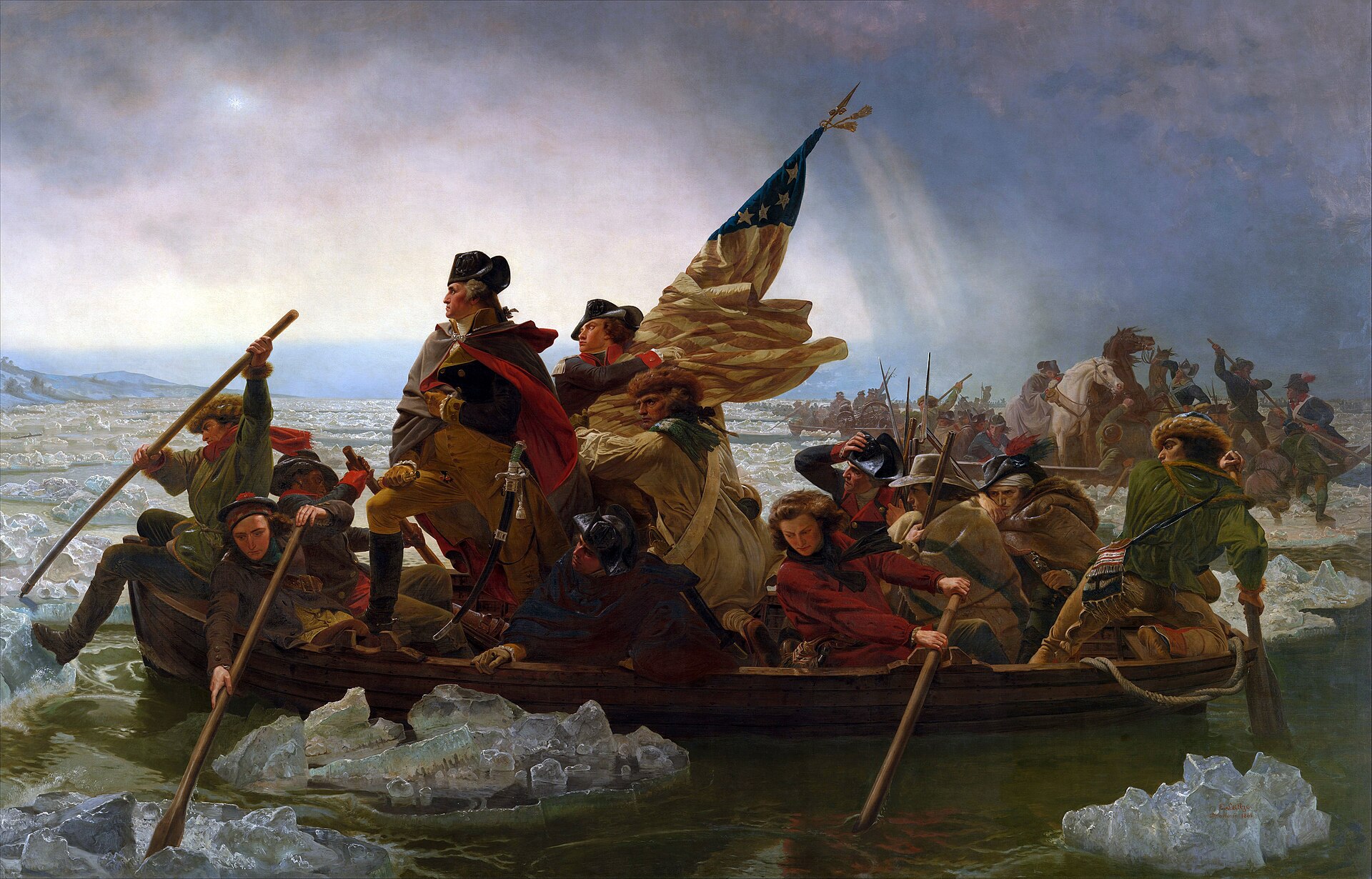
New Jersey earned the nickname "Crossroads of the American Revolution" for good reason. Between the outbreak of fighting and the war's end, the state saw more military engagements than any other of the thirteen colonies, with figures ranging from over 90 major clashes to a total of 296 skirmishes and battles fought on its soil. Among these were some of the conflict's most consequential moments, including the battles of Trenton, Princeton, and Monmouth. George Washington marched his troops across New Jersey four separate times and set up winter encampments there on three occasions, weathering both crushing defeats and morale-boosting triumphs within its borders.
The state's residents were far from united behind the cause of independence. New Jersey's population included many people who had come from England and still felt loyal to the Crown, along with others bound to Britain through business, family, or social connections. This split reached the very top of the colony's government: William Franklin, the royal governor of New Jersey, remained a committed loyalist even though his own father, Benjamin Franklin, was a driving force behind the revolution. William was Benjamin's illegitimate son, making the family rift especially striking.
The war also drew in enslaved people seeking a path to freedom. A number of them sided with the British after being promised liberty in exchange for their service. Colonel Tye stood out among them, an escaped slave who joined British forces and led relentless raids against New Jersey's inhabitants throughout the fighting.
Written by Aubrey Research from New Jersey in the American Revolution on Wikipedia, cited as a reference and not reproduced.
Chronology
Revolutionary fighting in New Jersey spanned 1776 to 1782. Select a year for the engagements of that season nationwide.
Where these engagements were fought
Select a marker to see the engagement and open its page. Larger red markers are surveyed battlefields with a mapped boundary.
Engagements in New Jersey.
Notable engagements
| Engagement | Year | Outcome | Forces or losses |
|---|---|---|---|
| Trenton | 1776 | American victory | United States: 2 dead from exposure ; 5 wounded; Hesse-Kasse |
| Springfield (Second) | 1780 | American victory | Continentals; 13 killed; 49 wounded; 9 missing; Militia: Inc |
| Assunpink | 1777 | American victory | United States: 7-100 killed or wounded; 55-365 killed, wound |
| Paulus Hook | 1779 | American victory | 2 killed; 3 wounded; 7 captured; 50 killed and wounded; 158 |
| Springfield (First) | 1780 | American victory | Continentals; 13 killed; 49 wounded; 9 missing; Militia: Inc |
| Springfield | 1780 | American victory | Continentals; 13 killed; 49 wounded; 9 missing; Militia: Inc |
| Elizabethtown | 1781 | Patriot victory | Loyalist militia: 17 killed; Patriot militia: 4 wounded |
| Ambush of Geary | 1776 | American victory | 16th (Queen's) Light Dragoons: One killed; Local Patriot mil |
| Battle of Millstone | 1777 | American victory | 4-5 killed or wounded; 25 killed or wounded; 12 captured |
| Battle of Short Hills | 1777 | British victory | Killed and wounded unknown; 70 captured; Hesse; 19px Brunswi |
| Affair at Little Egg Harbor | 1778 | British victory | 45 killed; 5 captured; 3 killed; 3 wounded |
| Battle of Quinton's Bridge | 1778 | British victory | 30-40 killed, wounded and missing; 1 wounded |
Plus 19 further documented engagements in the New Jersey record.
Battlefield locations and boundaries are compiled from public records, including the National Park Service American Battlefield Protection Program (public domain) and the American Revolution GIS work of Charles E. Frye (CC BY-SA 4.0).